Teaching a reliable recall, the command to come when called, is one of the foundational safety skills your puppy can learn. A solid recall gives your dog freedom to explore while providing you with absolute peace of mind in distracting environments. Follow this practical, step-by-step protocol to build an enthusiastic, reliable recall response.
Why Your Recall Cue Might Fail#
Before starting active drills, you must understand how dogs evaluate priorities. A puppy will choose whatever option provides higher value in the moment. If coming to you means the end of play, being put into a crate, or getting scolded, the command quickly loses its appeal. This is known as poisoning the cue.
To prevent this, strictly separate your recall cue from negative outcomes. If you need your puppy for a bath, a nail trim, or to leave the park, walk over and gently leash them without using your recall word. Reserve your recall cue exclusively for positive, high-reward experiences.
⚠️ Safety Warning: Never call your puppy to you to administer corrections, trim nails, give medication, or end a fun session early while you are building this cue. Doing so creates negative associations with the command and causes your puppy to hesitate or flee.
📋 In This Guide
The 3 Golden Rules of Reliable Recall#
- Never Repeat the Recall Word: Saying “come, come, come!” teaches your puppy that your cue is optional background noise. Say the cue once clearly. If they do not respond, re-engage their attention using movement, clapping, or high-pitched sound effects before trying again.
- Use High-Value Rewards: Standard kibble usually fails against real-world distractions like squirrels or other dogs. Reward recall with high-value treats such as small pieces of cooked chicken, freeze-dried liver, or real cheese.
- Always Be More Exciting Than the Environment: Puppies respond to movement and enthusiasm. Crouch down, open your arms, and take a few quick steps backward away from your puppy as you call them. Moving away triggers their natural chase instinct in your direction.
Phase 1: Indoor Name Game and Backing Away (Weeks 8 to 12)#
Start all recall foundation work indoors in a quiet room free of distractions.
Step 1: The Name Recognition Game#
- Say your puppy’s name in a happy tone.
- The split second they turn their head to look at you, mark the behavior with a verbal “Yes!” or a clicker.
- Immediately deliver a high-value treat.
- Repeat this 10 to 15 times per session until your puppy turns instantly upon hearing their name.
Step 2: The Run-Away Game#
- With your puppy standing nearby, say your recall cue (such as “Come” or “Here”) in an upbeat voice.
- Immediately take 3 to 4 fast steps backward away from your puppy.
- As soon as the puppy catches up to you, mark “Yes!” and give them 3 small treats in a row, one after another, to prolong the rewarding experience.
- Practice this during daily indoor sessions, combining it with basic household routines like crate training and potty training.
Phase 2: Long Line Recall Drills (Weeks 12 to 16)#
Once your puppy responds consistently indoors, transition to low-distraction outdoor spaces such as a quiet yard or open field. Never jump directly from off-leash indoors to off-leash outdoors.
To bridge this gap safely, use a dedicated long line that allows freedom while maintaining total control.
PetSafe 30-Foot Training Lead
A durable, lightweight long line that gives your puppy room to explore safely while maintaining complete physical control during open-field recall practice.
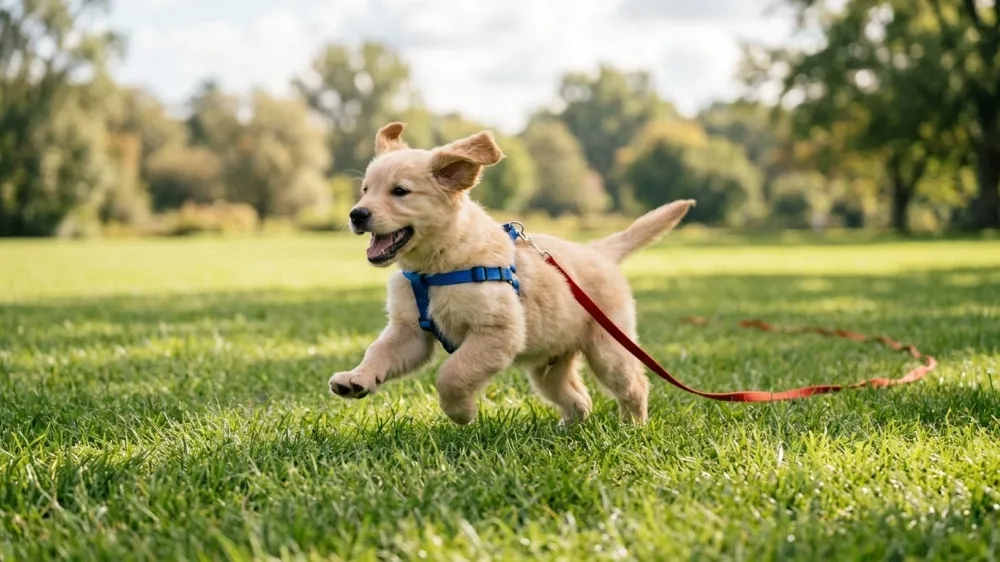
Attach the long line to a comfortable harness rather than a neck collar to protect your puppy’s neck if they run out the line. For advice on selecting suitable gear, see our guide on harness vs collar for puppies.
Step-by-Step Long Line Exercise#
- Attach a 15 to 30 foot line to your puppy’s harness and let them explore naturally.
- Wait until your puppy is paying attention to something mild (sniffing grass or looking away).
- Call your recall cue once clearly: “[Puppy’s Name], Come!”
- Back up 2 to 3 steps to invite movement.
- If your puppy turns and runs toward you, praise enthusiastically and reward heavily when they reach you.
- If your puppy ignores you, gently hold the long line to stop their forward motion and move backward to entice them toward you without harsh jerks. Reward generously once they arrive.
Recall Training Progression Overview#
| Training Stage | Environment | Primary Tool | Target Distance | Success Criteria |
|---|---|---|---|---|
| Stage 1: Foundation | Living room or quiet hallway | Short leash or no leash | 5 to 10 feet | 90% instant head-turn response |
| Stage 2: Yard Extension | Fenced yard or patio | 10 to 15 foot long line | 15 to 20 feet | Fast response despite outdoor scents |
| Stage 3: Park Distractions | Open field or quiet park | 30 foot training lead | 20 to 30 feet | Ignores low-level environmental distractions |
| Stage 4: Real World | Variable outdoor environments | Long line safety backup | 30+ feet | Reliability near other dogs, people, and wildlife |
Handling Distractions and Common Mistakes#
As you expand recall training, you will encounter real-world challenges. Integrating proper management strategies prevents bad habits from forming.
Mistakes to Avoid#
- Chasing Your Puppy: If your puppy runs away, chasing them turns recall into a game of keep-away. Instead, run in the opposite direction while calling them happily.
- Ending the Fun Every Time: If you call your puppy at the park, leash them, and leave every single time, they quickly learn that coming to you ends all fun. Practice call-and-release: call your puppy, reward them lavishly, and immediately send them back to play.
- Using the Cue for Biting Interventions: Avoid using your recall cue when correcting unwanted behaviors like mouthiness or nipping. Instead, address those behaviors separately using our guide on how to stop a puppy from biting hands.
💡 Pro Tip: Practice Reward Stacking. Instead of giving one large treat when your puppy reaches you, deliver 3 to 5 tiny treats individually over 5 to 10 seconds while giving gentle physical affection. This keeps your puppy in your space longer and reinforces that staying close to you is intensely rewarding.
Integrating Recall into Daily Outings#
A strong recall enhances every outdoor activity. As your puppy matures, pair recall work with structured walking habits. Loose leash walking skills prevent your puppy from constantly pulling toward every distraction. If you experience leash tension during outings, consult our comprehensive resource on how to stop puppy leash pulling.
Early recall practice also pairs well with gentle, controlled outings that build confidence. See our guide on how to socialize a puppy before vaccines.
💡 Related Guide: Practicing outdoor recalls safely requires proper distance equipment; compare the best long training leads for puppy recall for 15-foot to 30-foot distance training.
Frequently Asked Questions#
What should I do if my puppy ignores my recall cue?#
Never repeat the cue. Gently use the long lead to guide them toward you, or run backward while clapping your hands to make yourself enticing. Once they reach you, deliver a reward, but take note that the current environment may have too many distractions. Lower the distraction level for your next repetition.
Why does my puppy run away when I call them?#
Puppies usually run away because they think you are playing a game of chase, or because they associate coming to you with negative consequences (like bath time or leaving the park). Turn and run in the opposite direction to encourage them to chase you instead, and make sure coming to you always results in high-value rewards.
When can I safely let my puppy off-leash outdoors?#
Only transition to true off-leash freedom in unenclosed areas after your puppy demonstrates a 95% or higher success rate on a long line across high-distraction environments (such as parks with dogs and wildlife present). Most puppies do not achieve this level of proofed reliability until 10 to 12 months of age.
Summary: The 4-Step Recall Action Plan#
Building a rock-solid recall requires consistent practice, high-value rewards, and patience. Follow this quick checklist daily:
- Build High Association: Practice 10 rapid indoor repetitions daily using premium treats.
- Use Long Line Safety: Always secure your puppy with a 15 to 30 foot training lead in outdoor spaces until recall is 100% proofed.
- Practice Call-and-Release: Call your puppy, reward them, and release them back to play 8 out of 10 times to keep the cue positive.
- Never Poison the Cue: Walk over and pick up your puppy directly for unpleasant activities rather than using your recall command.