Stopping a puppy from biting hands requires immediate redirection, strict consistency, and teaching your puppy that human skin is off-limits for mouthy play. Puppies naturally explore their world with their teeth, but permitting them to use human hands as chew toys creates dangerous habits that become harder to fix as adult bite strength develops.
By executing a structured response every time teeth make contact with skin, you can extinguish hand-biting behavior within a few weeks while encouraging appropriate chew habits.
📋 In This Guide
Why Puppies Target Human Hands#
Human hands are moving, animated, and smell interesting, making them prime targets for a playful puppy. When you move your hands quickly, wave your arms, or pull away during play, your puppy views your hands as interactive prey.
Understanding the underlying driver behind the bite dictates how you should respond.
| Bite Motivation | Key Behavioral Signs | Immediate Solution |
|---|---|---|
| Exploratory Play | Soft mouthing, tail wagging, loose body posture | Immediate object redirection to an approved toy |
| Teething Pain | Gnawing on knuckles, inflamed gums, excessive drool | Cold chew toys, frozen rubber toys |
| Overtired / Over-Aroused | Hard biting, growling, darting back and forth, erratic energy | Enforced nap in crate or quiet exercise pen |
| Frustration / Demand | Nipping when restrained or denied attention | Zero attention, turning your back, quick removal of access |
If your puppy is biting because of teething, give them better things to chew; see our picks for the best toys for a teething puppy.
The 4-Step Protocol to Stop Hand Biting#
To eliminate hand biting completely, every member of your household must follow the exact same procedure without exception.
Step 1: Freeze Your Hands and Stop All Movement#
When a puppy bites your hand, your natural reaction is to yank your hand away. Yanking activates your puppy’s predatory chase drive, causing them to bite harder or lunge. Instead, instantly make your hand completely still and limp. A motionless hand loses its play value immediately.
Step 2: Redirect to an Approved Chew Toy#
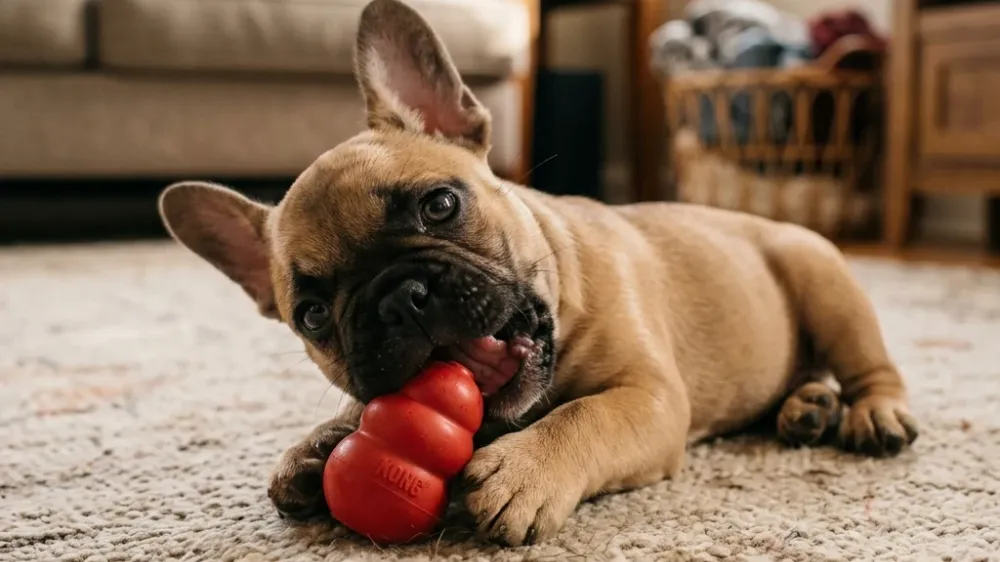
The moment your puppy releases your hand or pauses, immediately offer a textured chew toy. Keep an acceptable toy within arm’s reach in every room during the puppy raising stage. Praise your puppy enthusiastically the second their teeth engage with the toy instead of your skin.
KONG Puppy Teething Rubber Toy
An ultra-durable, soft rubber teething toy designed to soothe inflamed gums and provide an irresistible, legal chew outlet for mouthy puppies.
Step 3: Implement Immediate Removal of Attention#
If your puppy ignores the toy and goes straight back for your hands, say a calm, firm marker like “Too bad,” then stand up, cross your arms, and look away. If the puppy continues biting at your ankles or clothing, step behind a baby gate or exit the room for 15 to 30 seconds. This brief time-out teaches the puppy a direct consequence: teeth on human skin equals the complete end of fun and interaction.
Step 4: Manage Rest Schedules and Prevent Overtiredness#
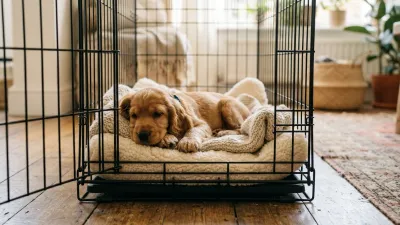
Young puppies need between 18 and 20 hours of sleep per day. When a puppy becomes overtired, their impulse control collapses, leading to frantic hand biting and wild behavioral bursts. When hand biting escalates despite redirection, your puppy is likely exhausted and needs an enforced nap. A comfortable crate or pen gives you a predictable spot for scheduled naps throughout the day.
💡 Pro Tip: Keep a lightweight soft drag leash on your puppy indoors under direct supervision. If your puppy enters a hyper-aroused state and targets your hands relentlessly, you can use the leash to guide them to their rest area without putting your hands near their mouth.
Common Mistakes That Escalate Hand Biting#
Many standard reactions from owners inadvertently reward or intensify hand biting. Avoid these common pitfalls:
1. High-Pitched Yelping#
Older advice often recommended squealing or yelping like a littermate when a puppy bites. While this works for a small percentage of timid puppies, for high-drive, bold, or working-breed puppies, high-pitched sounds mimic prey in distress and excite them further, leading to harder biting.
2. Roughhousing with Bare Hands#
Playing wrestling games or pushing your puppy’s face away with your hands teaches them that hands are play targets. Always put a toy, tug rope, or ball between your hands and your puppy’s mouth during playtime.
3. Physical Punishment or Muzzle Slapping#
Never smack a puppy’s nose, hold their muzzle shut, or force your fingers down their throat. Physical corrections breed defensive aggression, fear, and hand-shyness, destroying trust and causing your puppy to bite harder out of self-defense.
4. Inconsistent Rules Across Family Members#
If one family member allows the puppy to mouth their hands while relaxing on the couch, the puppy will continue biting everyone’s hands. Establish a zero-tolerance policy across all household members.
Managing Nighttime and Leash-Related Biting#
Hand biting often spikes during specific times of day or routine activities like walking and bedtime routines.
When preparing your puppy for bed, lower the lighting and minimize fast movements to prevent late-night biting sprees. If night biting disrupts your evening routine, consult our step-by-step guide on how to crate train a puppy overnight and our advice for managing night barking.
Similarly, if your puppy turns and bites your hands while walking on a leash, they are likely frustrated or overwhelmed by outdoor stimuli. Review our expert tactics on puppy leash walking techniques to build structured heel mechanics and eliminate leash-grabbing.
For overall housebreaking and daily structure, pairing bite prevention with routine house-training creates clear boundaries; see our guide on how to potty train a puppy for complete daily schedules.
Frequently Asked Questions#
Why does my puppy target my hands specifically?#
Puppies target hands because hands move, touch them, deliver treats, and are at eye level during play. Hands represent the primary way humans interact with puppies, making them the most dynamic and enticing object in a puppy’s immediate environment.
What should I do if my puppy bites children’s hands?#
Children often react to puppy bites by running, screaming, or waving their hands in the air, which puppies interpret as high-value play. Supervise all interactions closely. Teach children to turn into “tree trunks” by standing still, folding their arms under their armpits, and looking at their feet until an adult steps in to redirect the puppy.
At what age do puppies stop biting hands?#
Puppies usually decrease hand biting significantly around 5 to 6 months of age, coinciding with the completion of adult tooth eruption. However, without consistent intervention and redirection during the 8 to 20 week window, hand biting can persist as an adult habit.
Summary: Your Daily Action Plan to End Hand Biting#
Stopping hand biting is not an overnight event, but consistency yields swift improvements. Follow this daily rule set:
- Be Motionless: Freeze hands immediately when teeth touch skin.
- Redirect Instantly: Replace hands with a textured toy or rubber chew.
- Remove Access: Walk away for 20 seconds if hard biting continues.
- Enforce Naps: Put your puppy down for rest every 1 to 2 hours of awake time.
- Reward Calmness: Reward your puppy with treats and soft praise whenever they sit calmly near your hands without mouthing.