Potty training a puppy comes down to three things: close supervision, a steady schedule, and rewarding the right choice every time. Your job is to predict when your puppy needs to go and get them to the right spot before an accident happens. Start by reviewing your puppy supply checklist to make sure you have the necessary cleaning supplies and containment tools.
📋 In This Guide
The Golden Rules of Housebreaking#
Consistency is what makes housebreaking go quickly. Puppies learn fastest when the routine is the same every day. Follow these three rules:
- Supervision: When your puppy is inside, they must be in your sight at all times. If you cannot watch them, they must be in a crate or a puppy-proofed playpen. This prevents secret accidents.
- Routine: Take your puppy out immediately after waking up, after eating or drinking, after a play session, and right before bed.
- Reward: When your puppy eliminates outside, offer a tasty treat or happy praise right as they finish, so the reward is clearly tied to going in that spot.
Establishing a Potty Training Schedule#
Puppies have small bladders and limited physical control. A general rule of thumb is that a puppy can hold their bladder for their age in months plus one. For example, a two-month-old puppy can hold it for roughly three hours, though it is much shorter during active daytime hours.
Daily Schedule Template#
| Time of Day | Activity | Potty Trigger |
|---|---|---|
| Morning | Wake Up | Immediate outdoor trip |
| Mid-Morning | Post-Breakfast | Outdoor trip after eating |
| Noon | Post-Nap | Outdoor trip after waking |
| Afternoon | Playtime | Outdoor trip after exercise |
| Evening | Dinner | Outdoor trip after eating |
| Night | Pre-Bed | Last outdoor trip |
Young puppies also need a trip out every hour or two while awake, and after any burst of excitement such as visitors arriving. To line up meals with potty breaks, see our puppy feeding schedule by age.
Signs Your Puppy Needs to Go#
Watch for these cues and head outside the moment you see them:
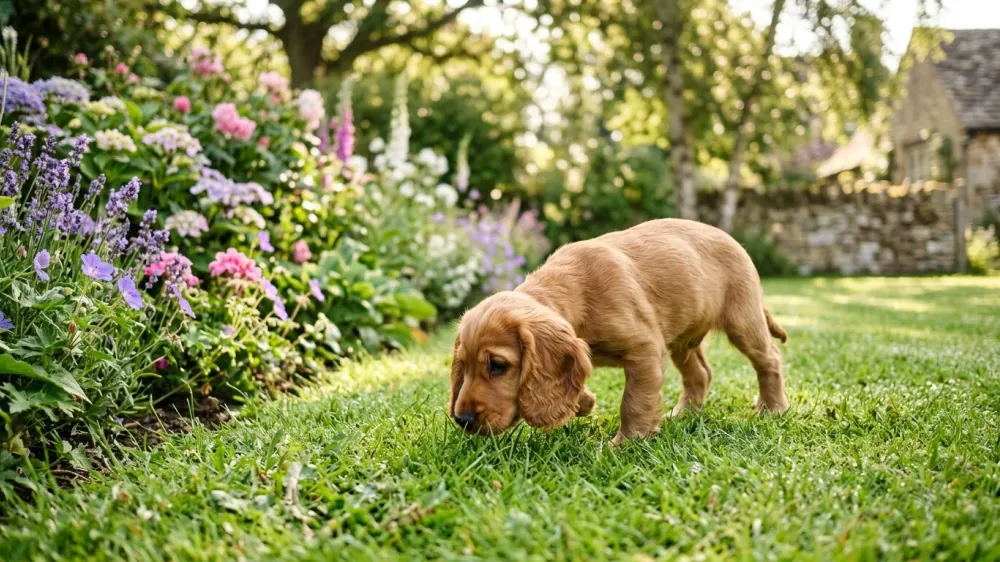
- Sniffing the floor in circles
- Suddenly wandering away from play or toward a door
- Whining, pacing, or restlessness
- Squatting or starting to circle
The more often you catch these early, the faster your puppy connects the outdoor spot with relief.
Using a Crate to Speed Things Up#
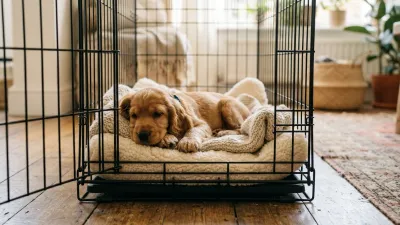
A crate is one of the most useful potty training tools. Most puppies try not to soil where they sleep, so a properly sized crate encourages them to wait until they are outside. If the crate is too large, the puppy may soil in one corner and sleep in the other, so use a divider panel while they grow. Our guide to the best puppy crates for crate training covers sizing.
Nighttime Potty Breaks#
Most young puppies cannot make it through the whole night at first. Set an alarm or listen for stirring, carry your puppy straight out, keep the trip quiet and boring, and put them back in the crate afterward. As bladder control improves, you can stretch the gap. Our guide on how to crate train a puppy overnight walks through the first nights.
MidWest iCrate Folding Metal Dog Crate
Durable folding metal wire crate featuring a divider panel, leak-proof plastic pan, and strong slide-bolt latches.
💡 Pro Tip: If your puppy has an accident in the house, do not scold them after the fact. Punishment creates fear and can cause the puppy to hide from you when they need to go, making future training much more difficult. Simply clean the area thoroughly with an enzymatic cleaner to remove the odor.
Rocco & Roxie Professional Strength Stain & Odor Eliminator
An enzymatic cleaner made to break down urine and other organic stains and odors from accident spots.
Troubleshooting Common Potty Training Issues#
Even with a solid plan, puppies will have accidents. The key is how you respond to these challenges. If you catch your puppy in the act, interrupt them with a calm, neutral sound like a soft clap, then immediately move them to their designated outdoor spot. If they finish outside, reward them generously.
Pros & Cons of Indoor Training Pads#
- Pros: Convenient during inclement weather or if you live in a high-rise building.
- Pros: Useful for very young puppies who cannot hold it long or are not yet going out much.
- Cons: Can confuse a puppy by teaching them that going to the bathroom on soft surfaces like carpets or rugs is acceptable.
- Cons: Often slows down the process of transitioning to outdoor-only elimination.
Managing Outdoor Behavior#
When you go outside, keep the puppy on a leash. This keeps them focused on the task at hand rather than playing in the yard. This practice also reinforces good habits you might be developing in other areas of training, such as those found in our guide on how to stop puppy leash pulling. Choose a specific spot in the yard for elimination and go there every time. The scent of previous trips will act as a trigger for the puppy to go again.
💡 Related Guide: When you can’t supervise, a pen keeps accidents in one easy-to-clean area. See our picks for the best puppy playpens for indoor use.
Excitement and Submissive Peeing#
Some puppies leak a little urine when greeting people or when they feel unsure. This is not a house training failure, and scolding makes it worse. Keep greetings low-key, crouch to the side instead of looming over your puppy, and greet outside for a while. Most puppies grow out of it as their confidence builds.
When Accidents Point to a Health Problem#
If your puppy was doing well and suddenly starts having accidents, dribbles urine, strains, pees very often, or has bloody or smelly urine, a urinary tract infection or other medical issue may be the cause. Talk to your vet before assuming it is a training problem. Loose stool can also set potty training back; our guide on puppy diarrhea and when to go to the vet explains what to watch for.
Some puppies also try to eat their own poop. Pick up the yard right after each trip so there is nothing to snack on.
Frequently Asked Questions#
How long does potty training take?#
Most puppies take anywhere from four to six months to become fully housebroken. Factors such as breed, consistency of the training routine, and the puppy’s individual development rate all play a role in the timeline.
What if my puppy keeps having accidents in the same spot?#
This is usually due to leftover odor that you cannot smell but your puppy can. Always use an enzymatic cleaner specifically formulated for pet waste. Household ammonia-based cleaners can smell like urine to a dog, which can draw the puppy back to that spot.
Should I wake my puppy up at night to pee?#
For the first weeks, many young puppies need one night trip. If your puppy wakes and stirs, take them out quietly. Once they are reliably dry through the night, you can stop setting an alarm.
Is it okay to use pee pads and go outside too?#
Yes, but it can slow things down. If you use pads, keep them in one spot and move toward outdoor trips as soon as you can, so your puppy does not learn that any soft surface is fine.
Summary: Consistent Success Plan#
Success in housebreaking is not about luck; it is about management. By limiting your puppy’s freedom, keeping a steady schedule, and rewarding every correct choice, you build habits quickly. Monitor your puppy closely, use crates during downtime, and keep your outdoor trips focused. With this structured approach, you will establish clean habits that last a lifetime.