Leash pulling is one of the most common behavioral issues dog owners face, and it happens because your puppy is naturally faster, more curious, and far more easily distracted than you are. The good news: teaching a puppy to walk on a loose leash is entirely achievable with consistency, timing, and the right tools. This guide breaks down exactly why puppies pull, outlines step-by-step training techniques, and introduces the best gear to set you both up for lifetime walking success.
📋 In This Guide
Why Do Puppies Pull on the Leash?#
Before we can correct the behavior, we must understand why it happens. Puppies do not pull because they want to dominate you or be the boss. They pull for three primary reasons:
- Natural Pace Differences: Humans walk incredibly slowly compared to dogs. A puppy’s natural walking pace is a brisk trot. To them, we walk at a snail’s pace.
- The World is Exciting: Puppies are sensory sponges. Every leaf, smell, person, and other dog is incredibly exciting. Pulling gets them to these rewards faster.
- Opposition Reflex: This is a key physiological response in dogs. If you pull on a dog’s leash, their instinctual reflex is to lean and pull in the opposite direction. Therefore, tugging back on the leash actually teaches them to pull harder.
💡 Pro Tip: Establish a specific “Reward Zone” at your hip. Whenever your puppy walks next to your hip line without tension, mark with “Yes!” and deliver a treat directly against your leg.
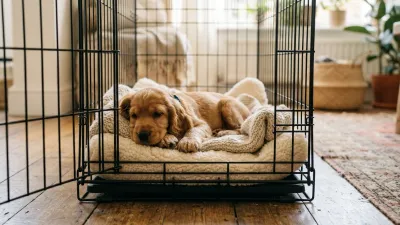
If your puppy is highly energetic, managing their overall stimulation levels throughout the day is key. Setting up a structured schedule (including physical exercise, calm crate naps, and puzzle play with interactive brain toys) helps them be calm, rested, and ready to learn during outdoor training sessions.
Additionally, for large-breed puppies who grow rapidly, physical training must go hand-in-hand with joint support. Feeding your puppy a high-quality diet, such as the best dog food for golden retriever puppies, helps their bones and joints develop correctly, preventing injuries that could be exacerbated by heavy pulling.
The Key Gear: Ditch the Collar for a No-Pull Harness#
When training a puppy, the gear you choose can either work against you or act as a powerful teaching aid. Standard flat collars and traditional back-clip harnesses can actually encourage pulling because of the opposition reflex.
To safely and humanely stop leash pulling, we highly recommend utilizing a front-clip harness. The Rabbitgoo No-Pull Dog Harness is an industry favorite and an exceptional choice for this purpose.
Unlike traditional harnesses, the Rabbitgoo No-Pull Dog Harness features two sturdy metal leash attachment points. The chest (front) attachment point is the secret weapon for training: when your puppy pulls, the front-clip design gently redirects their momentum sideways back toward you, naturally discouraging them from forging ahead. It also features adjustable straps to support a snug, escape-proof fit as your puppy grows, alongside breathable padded mesh to protect their delicate skin.
rabbitgoo No-Pull Dog Harness
A highly durable, budget-friendly chest harness featuring front and back leash attachments, perfect for training loose-leash walking.
The Premium Upgrade: Heavier-Duty Control#
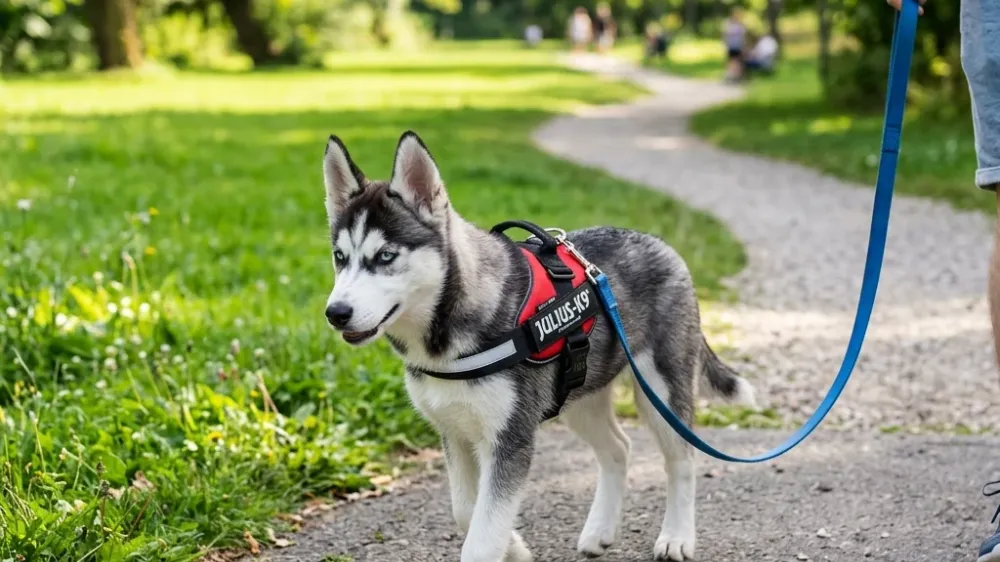
For owners of larger, stronger, or highly active breeds, a heavy-duty vest harness provides even greater security and durability. The Julius-K9 IDC Powerharness is a heavy-duty, ergonomic vest designed to distribute pressure evenly across the chest rather than the neck. It features a built-in safety handle on the back, allowing you to quickly grab and control your puppy in busy or unexpected situations, alongside reflective elements for night safety.
Julius-K9 IDC Powerharness
A premium, heavy-duty harness that provides maximum control, ergonomic chest-load distribution, and easy-grab handle.
Comparing Leash Walking Gear#
| Gear Type | Pros | Cons | Best For |
|---|---|---|---|
| Standard Collar | Lightweight; holds ID tags permanently. | High risk of neck/trachea injury; triggers opposition reflex. | Adult dogs who already walk politely. |
| Back-Clip Harness | No neck pressure; comfortable. | Encourages pulling (activates the “sled dog” pulling reflex). | Running, tracking, or small breeds with zero pulling issues. |
| Rabbitgoo No-Pull Harness | Dual clips (front/back); redirects pulling momentum safely; highly adjustable. | Must be sized correctly to prevent chafing. | Puppies and adult dogs learning loose-leash walking. |
| Julius-K9 IDC Powerharness | Indestructible build; back handle for close control; superior chest load distribution. | Lacks a front-clip option; can be warm in peak summer. | Strong pullers, large breeds, and active working dogs. |
⚠️ Safety Warning: Never use choke chains, prong collars, or slip leads on a pulling puppy. A puppy’s trachea (windpipe) consists of soft, delicate cartilage that can easily collapse under sudden or sustained pressure. Repeatedly yanking or allowing a puppy to pull heavily on a collar can lead to permanent airway damage, chronic coughing, thyroid issues, and heightened anxiety. Stick to safe, non-restrictive front-clip harnesses.
Step-by-Step Training Methods to Stop Leash Pulling#
To teach your puppy that walking next to you is the most rewarding place on earth, utilize these three proven positive-reinforcement techniques.
1. The “Red Light, Green Light” Method#
This method teaches your puppy that pulling makes them stop, while a loose leash gets them where they want to go.
- Step 1: Start walking. The moment the leash becomes taut, stop walking immediately. Become a statue.
- Step 2: Do not yank or pull back. Simply hold your ground and wait.
- Step 3: Eventually, your puppy will look back at you or step backward to slacken the leash. The second the leash goes loose, praise them (“Yes!”) and take a step forward.
- Step 4: Repeat. This teaches the puppy that their tension on the leash acts as a “red light,” while a loose leash is a “green light.”
2. The “About Turn” Method#
If your puppy is highly distracted and ignores the “Red Light” method, change directions to regain their focus.
- Step 1: Walk forward. When your puppy gets ahead of you and begins to pull, gently call their name and make a 180-degree turn, walking in the opposite direction.
- Step 2: As your puppy turns to catch up to you, reward them with a high-value treat when they reach your side.
- Step 3: Continue this dance. It teaches the puppy to pay attention to your movement because you might change direction at any moment.
3. Creating the “Reward Zone”#
The “Reward Zone” is the area right next to your hip. You want your puppy to associate this specific physical space with wonderful things.
- Step 1: Stand still with your puppy on a leash. Hold a handful of pea-sized, high-value treats (like freeze-dried liver or boiled chicken) on the side you want your puppy to walk on.
- Step 2: Feed your puppy several treats in rapid succession while they are standing next to your leg.
- Step 3: Take one step forward. If your puppy stays with you, deliver another treat at your hip.
- Step 4: Gradually increase the number of steps you take between treats.
Pro Tips for Leash Training Success#
- Burn Energy First: Trying to leash-train a puppy bursting with frantic energy is an uphill battle. Play a game of fetch or tug inside the house for 10 minutes before your walk to take the edge off.
- Keep Training Sessions Short: Puppies have tiny attention spans. Five to ten minutes of structured leash training per day is far more effective than an exhausting 45-minute walk where you both lose patience.
- Use High-Value Treats: Kibble won’t cut it outdoors. Use smelly, irresistible treats that your puppy only gets during walks.
- Be Consistent: Everyone in your household must follow the same rules. If one family member allows the puppy to pull, it will set your training back significantly.
Frequently Asked Questions#
How long does it take to stop a puppy from pulling on the leash?#
Most puppies show noticeable improvement within two to four weeks of consistent daily training sessions. The speed depends on how consistent your household is and how much structured practice you complete each day. Even five to ten minutes of focused loose-leash work per day produces measurable results faster than long, unstructured walks.
Should I use a harness or a collar to stop puppy leash pulling?#
For a puppy that pulls, a front-clip harness is strongly recommended over a flat collar or back-clip harness. A front-clip harness gently redirects your puppy back toward you when they lunge forward, making training much more intuitive. A flat collar during heavy pulling can place dangerous pressure on a puppy’s sensitive trachea and thyroid gland.
Is it okay to let my puppy sniff during a walk?#
Yes, and it is actually beneficial. Allowing your puppy to stop and sniff is one of the most mentally enriching activities for a dog. The key is teaching them to only sniff on cue or when you release the tension, not whenever they choose to lunge toward an interesting smell. Use a release cue like “go sniff” to give them structured freedom.
Summary: Building Healthy Walking Habits#
Teaching your puppy to walk on a loose leash takes time, empathy, and consistency. Remember that the outdoor world is full of new sights and smells, so self-control is hard work for a young puppy. By pairing positive reinforcement techniques with the supportive design of the Rabbitgoo No-Pull Dog Harness, you can curb the pulling habit and set the foundation for years of enjoyable, stress-free adventures together.