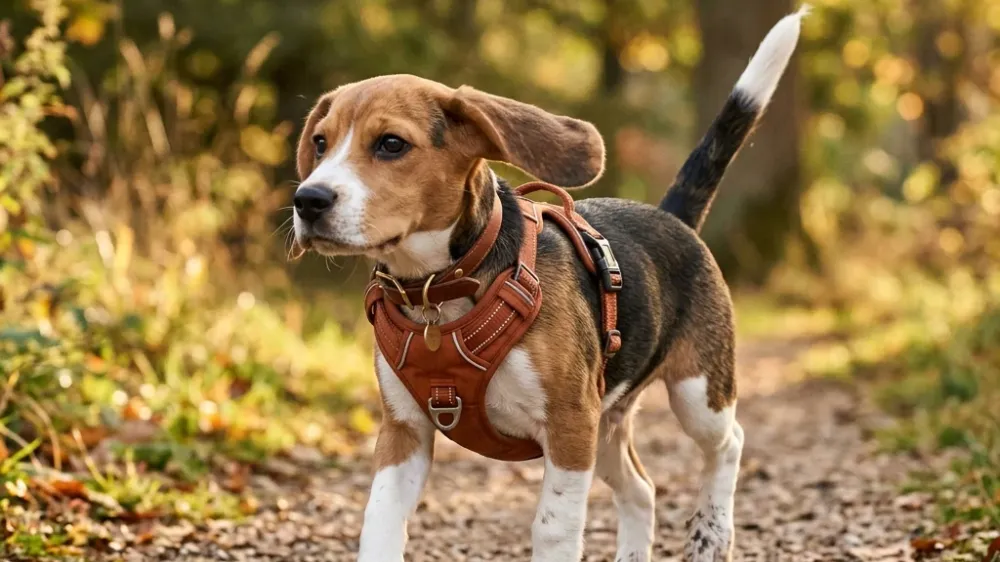
Choosing between a harness and a collar is one of the first physical equipment decisions you face when equipping a young puppy for outdoor adventures. While traditional collars have long been standard equipment, we recommend harnesses for leash training young dogs. The fundamental difference comes down to mechanical leverage, neck safety, and control during early obedience work.
A young puppy’s neck and trachea are delicate anatomical structures undergoing rapid growth. Pulling against a rigid neck restraint can exert sudden force on vulnerable throat cartilage, potentially causing acute strain or chronic respiratory stress. Understanding how collars and harnesses distribute pressure allows you to protect your puppy’s physical health while teaching clean loose-leash walking manners.
📋 In This Guide
The Puppy Collar: Primary Uses and Safety Considerations#
Standard flat collars serve a key daily function: holding identification tags, microchip registration tags, and local licensing tags safely against your puppy’s neck. A lightweight flat collar allows quick physical handling around the home and helps your puppy remain identifiable if they slip out through an open door.
However, using a collar as the primary point of attachment during outdoor leash walks presents serious physical safety risks for young puppies. When an excited puppy lunges toward a passing leaf, another dog, or a squirrel, that sudden tension concentrates entirely on the neck, hyoid bone, and windpipe. Small breeds, toy breeds, and brachycephalic dogs are especially vulnerable to tracheal collapse when walked exclusively on flat collars.
The Puppy Harness: Ergonomics, Safety, and Control#
A well-designed harness shifts tension away from the neck entirely, spreading physical pressure across the puppy’s broad chest, ribcage, and shoulders. This anatomical protection makes harnesses the preferred choice for leash training energetic puppies who have not yet learned how to walk politely on a lead.
Harnesses also provide handlers with superior physical control without causing discomfort. Front-clip harnesses feature a leash attachment point situated at the center of the chest. When a puppy attempts to pull forward, the front ring gently redirects their forward momentum sideways toward you, naturally deterring pulling without neck strain. Back-clip harnesses are ideal for calm walkers and long-line exploration, keeping the leash away from the puppy’s front paws.
2 Hounds Design Freedom No-Pull Harness
Features a patented rear control loop and front chest attachment point that gently redirects your puppy's direction without putting pressure on their sensitive neck.
💡 Pro Tip: Introduce your puppy to wearing a harness indoors before ever attaching a leash. Let them wear the unclipped harness around the house while enjoying positive rewards, such as interactive games or chewing on top-rated toys for a teething puppy, so they associate the gear with enjoyable experiences.
Direct Comparison: Harness vs Collar for Puppies#
Evaluating key features side by side shows why it pays to use specific gear for specific situations.
| Feature | Flat Puppy Collar | Padded Y-Shaped Harness |
|---|---|---|
| Primary Purpose | Identification tags & quick handling | Leash walks, training & physical control |
| Pressure Distribution | Concentrated directly on throat and spine | Broadly distributed across chest and ribcage |
| Tracheal Strain Risk | High risk during sudden lunging | Zero direct pressure on the windpipe |
| Escape Hazard | Moderate (can back out if loose) | Low (when adjusted correctly) |
| Training Control | Low (can trigger pulling reflex) | High (front-clip redirects forward momentum) |
| Daily Convenience | High (can wear continuously indoors) | Medium (remove during unsupervised downtime) |
Detailed Pros and Cons Breakdown#
Flat Collars#
Pros:
- Quick to slip on for fast late-night potty trips outdoors.
- Ideal for holding required identification tags and medical contact info.
- Highly adjustable to accommodate rapid growth spurts without frequent gear replacements.
Cons:
- Risk of throat trauma, coughing fits, and neck strain if a puppy lunges unexpectedly.
- Triggers the opposition reflex, encouraging strong-willed puppies to pull harder against neck pressure.
- Easily slips off narrow-headed puppies if not fitted precisely.
Body Harnesses#
Pros:
- Eliminates pressure on the delicate neck, trachea, and cervical spine.
- Provides far better physical control during high-arousal training environments.
- Front-clip designs reduce leash pulling naturally without applying painful force.
Cons:
- Takes slightly more time to slip over the head and buckle around an excited puppy.
- Puppies outgrow harnesses faster than collars, requiring periodic size upgrades.
- Can catch on indoor items if left on unsupervised.
⚠️ Safety Warning: Never leave a walking harness on your puppy inside a crate or during unsupervised indoor play. Straps can catch on crate wire or furniture frames, creating a severe entanglement and strangulation hazard. Always remove walking harnesses when your puppy is relaxing indoors.
Harness vs Collar: The Dual-Gear Strategy#
Rather than choosing between a harness or a collar, we recommend a dual-gear strategy. Fit your puppy with a lightweight, comfortable flat collar for continuous indoor wear and identification display. When preparing for outdoor walks, neighborhood socialization, or obedience training, attach your walking leash directly to a broad-chested Y-harness.
Pairing a padded harness with dedicated leash training tools, such as recommended best dog leashes for puppy training, establishes clear walking rules while keeping your puppy comfortable. If your puppy struggles with impatience during gear fitting, direct their mental focus using interactive brain toys to build calm patience during gear routines.
How to Safely Fit a Puppy Harness#
A walking harness must fit properly to support physical safety and full movement.
- The Two-Finger Rule: Slide two fingers easily beneath every strap across the neck, chest, and girth. If your fingers feel pinched, loosen the strap; if three or more fingers fit easily, tighten the harness.
- Verify Shoulder Clearance: Make sure the harness straps form a clear Y-shape across the chest, leaving the shoulder joints completely free to extend full stride. Avoid horizontal strap harnesses that press straight across the front shoulder bones.
- Monitor Growth Twice Weekly: Puppies grow rapidly. Inspect strap tension twice every week and expand buckles as your puppy gains weight and height to prevent uncomfortable chafing.
Should an 8-week-old puppy wear a harness or collar?#
An 8-week-old puppy should wear a lightweight flat collar indoors to get accustomed to holding ID tags. For outdoor trips and early leash training, use a soft, padded harness to protect their delicate neck and windpipe from accidental pressure.
Can a puppy sleep with a harness on?#
No, puppies should never sleep with a harness on. Harness straps can snag on bedding, crate wires, or playpen panels, presenting a severe entanglement risk. Harnesses should only be worn during active, supervised walking and training sessions.
Will wearing a harness teach a puppy to pull more?#
Standard back-clip harnesses can engage a dog’s natural opposition reflex if you pull straight back against them. However, using a Y-shaped front-clip harness redirects your puppy’s forward momentum sideways toward you, making it far easier to teach loose-leash walking habits without encouraging pulling.
Summary: The Ultimate Puppy Gear Strategy#
Protecting your puppy’s anatomical health while building reliable loose-leash walking habits requires using the right tool for the job. Use a soft, lightweight flat collar strictly for carrying basic identification tags indoors, and rely on a padded Y-shaped harness for all outdoor walks, training sessions, and travel. Inspect strap fit twice weekly as your puppy develops, reward calm responses during gear fitting, and guide your young dog into a lifetime of happy, safe outdoor walks.