Puppies are biologically hardwired to panic when left alone because, in nature, isolation from the pack presents a real survival threat. Resolving puppy separation anxiety requires systematic desensitization, structured environmental management, and consistent daily routines. By identifying the difference between mild isolation distress and true panic, you can implement a targeted behavior modification plan that teaches your young dog to feel safe when solo.
📋 In This Guide
Isolation Distress vs. Clinical Separation Anxiety#
Before launching a behavior modification protocol, you must assess whether your dog suffers from basic isolation distress or severe separation anxiety. Isolation distress means the puppy dislikes being alone but calms down once given an engaging task or when another human is present. True separation anxiety is a panic disorder centered around a specific attachment figure, often triggering destructive behavior, hypersalivation, or continuous vocalization regardless of toys or alternative company.
| Behavioral Indicator | Isolation Distress | Severe Separation Anxiety |
|---|---|---|
| Onset | Whining starts within 2-5 minutes, then tapers off | Immediate panic, howling, or digging at doors within seconds |
| Physical Signs | Moderate panting, mild pacing | Excessive drooling, dilated pupils, self-injurious escape attempts |
| Enrichment Receptivity | Consumes high-value treats or stuffed toys | Refuses food completely while alone |
| Crate Response | Relaxes after a short settling period | Destroys crate wire, chews bedding, or soils self |
| Targeted Fix | Routine alone-time practice and toys | Systematic micro-desensitization, potential veterinary intervention |
The Step-by-Step Departure Desensitization Protocol#
Desensitization is the process of exposing your puppy to short, non-fear-inducing durations of solitude and gradually increasing the time as their confidence grows.
Step 1: Deconstruct Your Departure Cues#
Puppies learn your daily routine quickly. Picking up car keys, putting on shoes, or grabbing a jacket triggers anxiety long before you walk out the front door. To break this prediction cycle, perform these actions without leaving.
- Pick up your keys, put them in your pocket, and sit on the couch.
- Put on your heavy winter coat, walk into the kitchen, make a cup of tea, and take the coat off.
- Touch the front door handle, then turn around and sit down.
Repeat these trigger actions 5 to 10 times daily. When departure cues no longer signal your imminent disappearance, your puppy’s baseline anxiety drops significantly.
Step 2: Implement Micro-Absences#
Begin training when your puppy is physically exercised and mentally tired. Do not start with a four-hour absence. Start with increments measured in seconds.
- Ask your puppy to sit or lay down in a designated safe area.
- Step behind a baby gate or door, closing it completely.
- Wait 3 to 5 seconds, step back into view, and remain completely calm.
- Slowly increase duration: 10 seconds, 30 seconds, 1 minute, and 3 minutes.
If your puppy vocalizes or shows signs of distress, you extended the duration too quickly. Step back to an interval where your puppy successfully remains calm.
Step 3: Practice Low-Key Departures and Arrivals#
Your emotional energy sets the tone for your puppy. Overly affectionate goodbyes build anticipation and stress, while chaotic, highly emotional greetings confirm to the puppy that your return was indeed a relief from danger.
- Leaving: Walk out calmly without long eye contact, high-pitched talking, or physical coddling.
- Returning: Enter quietly. Ignore the puppy for the first 30 to 60 seconds until all four paws are on the floor and their body language is neutral. Once calm, offer gentle, quiet affection.
Environmental Management and Solitary Enrichment#
Management keeps your puppy from practicing unwanted anxious behaviors while training takes effect. Creating a secure, predictable environment helps smooth out the learning curve.
KONG Puppy Toy
A durable rubber enrichment toy designed specifically for teething puppies that keeps them mentally engaged and distracted during departure practice.
Pairing alone-time with high-value puzzle toys creates a positive emotional response to your absence, known as counter-conditioning. Fill a durable rubber toy with wet food, plain pumpkin, or low-sodium broth, and freeze it overnight. Offer this high-value item strictly when you leave. The licking action releases calming endorphins in the puppy’s brain.
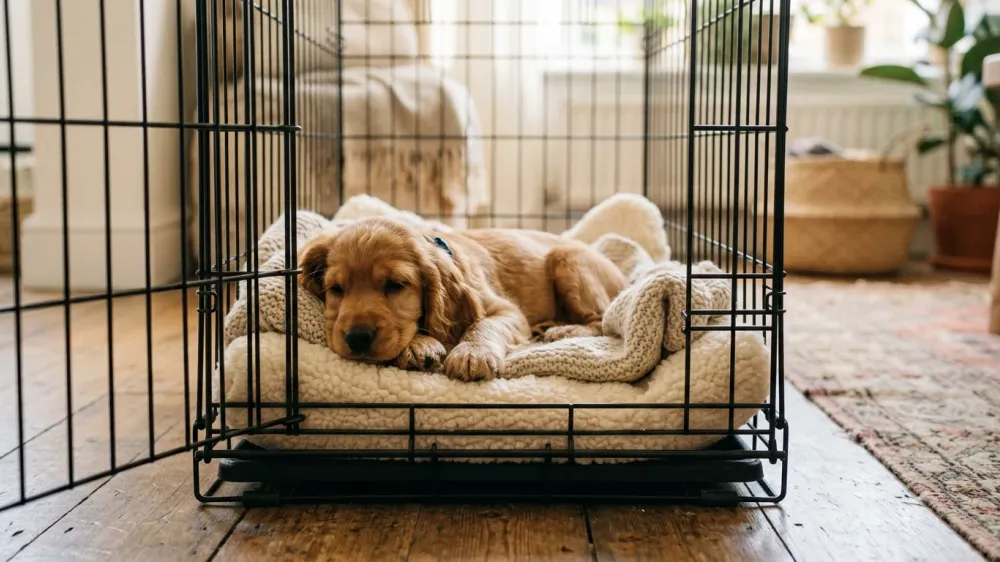
Setting up a secure resting area matters just as much. Short, positive crate sessions (see how to crate train a puppy overnight) help your dog view their crate as a safe den rather than a prison. Proper crate management also speeds up housebreaking, as covered in our step-by-step breakdown for a complete potty training schedule.
💡 Pro Tip: Leave a recently worn shirt or blanket in your puppy’s resting area. Your familiar scent provides a sense of security and significantly reduces physiological stress responses during short alone periods.
Daily Physical and Mental Fatigue Strategies#
A tired puppy is far less likely to experience intense anxiety. Before practicing absences, make sure your puppy’s physical and cognitive needs are met.
- Physical Exercise: Take your puppy on an age-appropriate sniff walk. Sniffing lowers a dog’s heart rate and provides rich sensory feedback.
- Mental Enrichment: Engage in 5 minutes of basic obedience practice. Practicing core commands using our protocol on how to train a puppy to come when called builds focus and exhausts mental energy much faster than plain physical running.
- Redirect Chewing: Anxious puppies often chew destructively. Direct that energy toward safe chews; our picks for the best toys for a teething puppy are a good start.
Aligning your departure schedule with your dog’s natural sleep cycles helps prevent vocalization issues during quiet times, similar to the techniques used to stop puppy barking at night.
Frequently Asked Questions#
How long can a puppy safely be left alone?#
As a general rule, a puppy can hold their bladder and manage solitude for one hour per month of age, plus one hour. For example, a 3-month-old puppy can manage up to 4 hours maximum. However, when dealing with active separation anxiety, initial absences should be much shorter and built up systematically to avoid inducing panic.
Should I let my puppy cry it out when I leave?#
No. Allowing a puppy with true separation anxiety to cry it out usually elevates their panic, leading to severe behavioral distress, destructive habits, or self-harm. Distinguish between demand whining (which should be ignored) and genuine fear. If your puppy is panicking, return, reduce the difficulty of the exercise, and lower the alone-time duration.
Can background noise or TV help calm an anxious puppy?#
Yes. White noise machines, classical music, or ambient TV noise can buffer sudden external sounds that trigger barking. More importantly, consistent background noise provides a sensory signal that the home environment is secure and predictable.
Summary: Your Alone-Time Success Roadmap#
To successfully resolve puppy separation anxiety, stick to a structured daily schedule that balances physical activity, brain games, and planned alone-time practice. Focus on these core steps:
- Identify the behavior: Differentiate between basic boundary testing and true panic disorder.
- Desensitize cues: Neutralize triggers like key jangling, shoe collection, and door opening.
- Build time incrementally: Increase separation from 5 seconds up to extended stays without pushing your dog past their comfort threshold.
- Provide enrichment: Leverage stuffed frozen toys and safe confinement spaces to build positive associations with quiet time.
- Maintain calm energy: Keep entrances and exits quiet, composed, and low-key.
Consistency and patience are key. By working systematically within your puppy’s comfort zone, you build lifelong independence and emotional resilience.