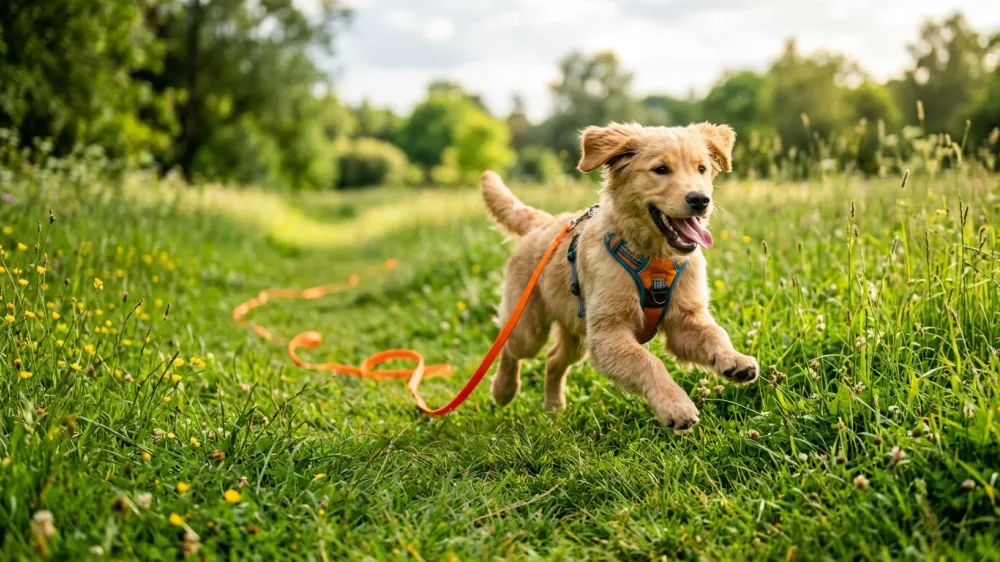
Long training leads are one of the best tools for bridging the gap between a standard leash and off-leash freedom. They provide the safety of a physical connection while allowing your puppy to experience the independence necessary to learn distance commands. Use these leads to prevent puppies from learning that they can simply ignore a call and run away. With a safety line attached, every recall can end in a successful return.
Picking the right recall gear is an early step toward a well-behaved adult dog. A long lead, often called a check cord or long line, typically ranges from 15 to 50 feet. It allows you to practice the ‘come’ command in various environments, from quiet parks to busy fields, while keeping your puppy safe from traffic or other distractions. This tool is not just for exercise; it is a foundational piece of equipment for building a reliable life-saving skill.
📋 In This Guide
Why Long Training Leads Are Necessary for Recall#
Recall is one of the hardest skills to teach a puppy to come when called because it requires the dog to choose you over every other interesting smell or sight in the environment. Without a long line, a puppy that decides to chase a squirrel learns that they can ignore your voice with no consequences. This behavior quickly becomes a habit that is difficult to break later in life.
Using a long lead provides three primary benefits:
- Physical Safety: You maintain control in unfenced areas, preventing the puppy from wandering into danger.
- Prevention of Self-Rewarding: If your puppy ignores a command, they cannot run off to find a more interesting ‘reward’ elsewhere.
- Muscle Memory: Consistent successful recalls build a reflex-like response. The lead allows you to gently guide the puppy toward you if they hesitate, making sure they always complete the action.
⚠️ Safety Warning: Never attach a long training lead to a standard neck collar. If a puppy reaches the end of a 30-foot line at full speed, the sudden stop can cause severe neck or spinal injuries. Always use a well-fitted back-clip harness when training with long lines.
Choosing the Best Material for Your Lead#
Not all long lines are created equal. The material you choose affects the weight, durability, and ease of use. A lead that is too heavy may discourage a small puppy from moving, while one that is too thin might be difficult for you to grip quickly.
| Material | Pros | Cons |
|---|---|---|
| Nylon | Lightweight, affordable, and very strong. | Can cause rope burn on hands; gets heavy when wet. |
| Biothane | Waterproof, smell-proof, and easy to wipe clean. | More expensive; can be slippery when very wet. |
| Cotton | Soft on hands; less likely to cause friction burns. | Absorbs water and mud; can rot if not dried properly. |
| PVC/Plastic | Tangle-resistant and easy to see in grass. | Can be stiff in cold weather; heavier than nylon. |
For most owners, a high-quality nylon or Biothane lead is the best choice. Nylon is excellent for dry environments and remains the standard for most owners. If you frequently train in wet grass or near water, Biothane is the superior option as it does not absorb moisture or odors.
Selecting the Ideal Length for Your Training Stage#
The length of the lead should correspond to your puppy’s current skill level and the environment where you are training. Using a lead that is too long for the space can lead to tangles and safety hazards.
15-Foot Leads#
This is the best starter length. It provides enough room for the puppy to move away from you but is short enough that you can manage the excess slack easily. It is ideal for suburban yards or smaller parks where you want to keep the puppy within a close radius.
30-Foot Leads#
This is often considered the ‘sweet spot’ for recall training. It allows the puppy to reach a distance where they feel truly independent, which is where real training happens. We recommend this length for general obedience work.
50-Foot Leads#
These are reserved for advanced distance work and simulating off-leash hiking. Managing 50 feet of line requires significant coordination from the handler to prevent the puppy from getting tangled in brush or wrapped around trees.
A Practical Guide to Using a Long Line#
Effective use of a long training lead requires more than just holding the end of the rope. You must learn to manage the slack so the puppy does not trip over it, and you do not lose your grip if they bolt. As with crate training, recall work goes best with a consistent routine and clear expectations.
Step 1: Manage the Slack#
As your puppy moves toward you, gather the excess lead in large loops in your hand. As they move away, let the lead slide through your fingers. Avoid wrapping the lead around your wrist, as a sudden lunge could cause a wrist injury.
Step 2: The ‘Anchor’ Technique#
If you need to stop your puppy, do not jerk the lead. Instead, brace your feet and hold the lead firmly against your hip. Let the puppy reach the end of the line naturally. This ‘anchor’ method uses your body weight to provide a firm but steady stop.
Step 3: Practice ‘Call-Aways’#
While the puppy is sniffing or exploring at the end of the line, call their name followed by your recall command (e.g., ‘Fido, Come!’). If they turn and move toward you, praise them enthusiastically and reel in the slack. If they ignore you, give a very gentle vibration on the line to get their attention, then guide them toward you.
Maintenance and Care for Training Gear#
Since long leads spend a lot of time dragging through grass, dirt, and mud, they require regular maintenance. Inspect your lead before every session for signs of wear, such as fraying nylon or a weakening metal clip.
For nylon leads, a simple soak in warm water with mild soap will remove most dirt. Always hang the lead to air dry completely before storing it. For Biothane or coated leads, a quick wipe with a damp cloth is usually sufficient. Store your leads in a cool, dry place to prevent the metal hardware from rusting over time.
💡 Related Guide: A long line should always clip to a harness. Compare options in our guide to the best harness vs collar for puppies.
Frequently Asked Questions#
Should I use a handle or a ‘drag line’ without a handle?#
For most puppy owners, a lead with a handle is safer because it provides a secure grip point. Some owners use ‘drag lines’ (leads with the handle cut off) to prevent the lead from snagging on bushes when the dog is running, but this requires a very high level of control.
How do I prevent the long lead from tangling around my puppy’s legs?#
Keep the lead as high as possible. By holding your hand at waist height rather than at your side, you keep the first few feet of the lead off the ground, which reduces the chance of the puppy stepping over it. Always try to stay behind your puppy rather than letting them circle you.
At what age can I start using a long training lead?#
You can start as soon as your puppy is comfortable wearing a harness and walking on a standard leash, usually around 10 to 12 weeks of age. Start in a low-distraction environment, like a hallway or a fenced backyard, before moving to open spaces.
Summary: Your Recall Training Action Plan#
Mastering the recall is a journey that requires patience and the right tools. To get the most out of your long training lead, follow this structured plan:
- Get the Right Gear: Purchase a 20 to 30-foot lead and a sturdy back-clip harness. Avoid retractable leashes for this type of training.
- Start Low-Distraction: Practice in your yard or a quiet park before moving to more challenging areas.
- Keep Sessions Short: 5 to 10 minutes of focused recall work is better than 30 minutes of distracted wandering.
- Always Reward: Every time your puppy returns to you on the long line, provide a high-value treat or a favorite toy. This makes the recall the most rewarding part of their day.
- Consistency is Key: Use the same command every time and never use the recall command for something the puppy dislikes, such as ending playtime or bath time.
By consistently using a long lead, you provide your puppy with the freedom they crave and the safety they need to grow into a reliable off-leash companion.