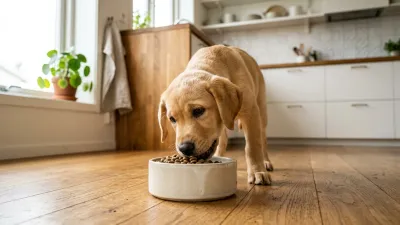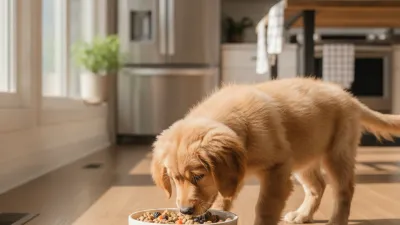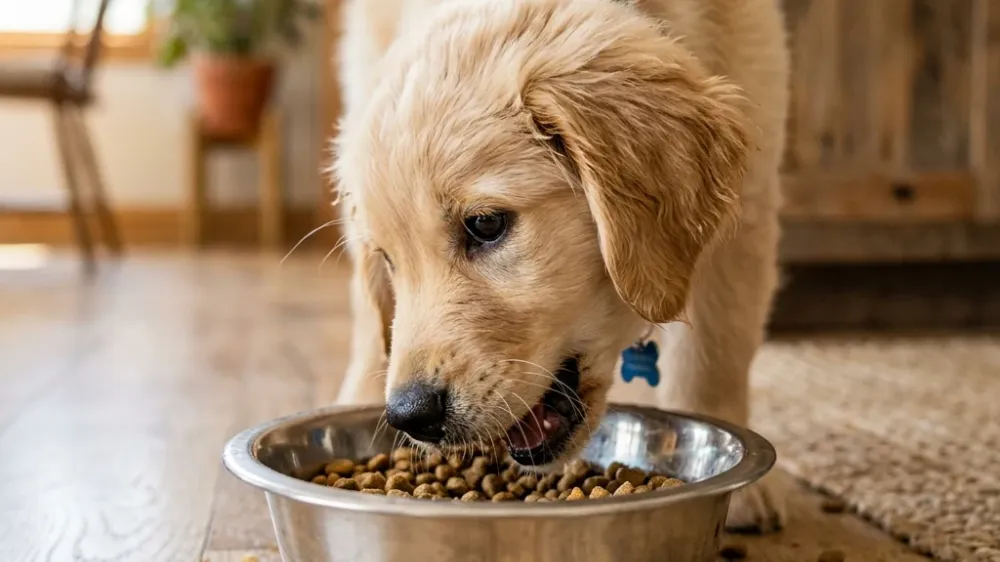
Consistent meal times are the backbone of house training and steady energy. Young puppies need frequent, small meals to keep their blood sugar even, and set mealtimes make their potty breaks predictable for potty training. As your puppy grows, the number of meals drops and the portions get bigger.
📋 In This Guide
Puppy Feeding Schedule by Age: The Daily Breakdown#
Adjusting the number of meals as your puppy grows heads off hunger-driven behavior and keeps bowel movements regular. Use this schedule as your baseline:
| Age Range | Number of Meals Daily |
|---|---|
| 8 Weeks to 3 Months | 4 Meals |
| 3 Months to 6 Months | 3 Meals |
| 6 Months to 1 Year | 2 Meals |
8 Weeks to 3 Months: How Often an 8 Week Old Puppy Should Eat#
An 8 week old puppy should eat four small meals a day. The stomach is tiny and the energy needs are high, so one or two big meals are too much at once, and long gaps can leave a small puppy shaky or flat. Here is a sample day:
| Meal | Sample Time | Why |
|---|---|---|
| Breakfast | 7:00 AM | Refuel after a night’s sleep |
| Lunch | 11:30 AM | Keep energy steady |
| Mid-Afternoon | 4:00 PM | Head off the late-day slump |
| Dinner | 7:30 PM | Settle for the night |
Feed breakfast soon after your puppy wakes up, since puppies can run low on blood sugar after a long night. Leave fresh water out all day, but you can pick up the bowl shortly before bedtime to cut down on overnight accidents (see how much water a puppy should drink). This is also a good time to link meals to crate training overnight so your puppy learns to settle after eating. If a young puppy skips more than one meal in a row, call your vet.
3 Months to 6 Months#
As the puppy enters a rapid growth phase, you can reduce feedings to three per day. The focus here is on consistent portion control based on the brand’s feeding guide. Large breeds need extra care here; see the best dog food for golden retriever puppies for an example. Many puppies are ready to drop to three meals around 12 to 14 weeks. Watch body condition closely during this change; if your puppy seems tired or constantly starving, check your portions against the packaging.
6 Months and Beyond#
Most puppies transition to two meals per day by the six-month mark. Some larger breeds may require a gradual shift to prevent over-stretching the stomach, but the two-meal structure is the standard for long-term health. A steady schedule also gives you predictable energy for training sessions like loose leash walking. When your puppy nears adulthood, our guide on when to switch a puppy to adult dog food covers the next change.
💡 Pro Tip: Weigh food on a digital kitchen scale, or at least use a proper measuring cup, rather than guessing with a scoop. Small daily overfeeding adds up to fast, unhealthy weight gain that puts stress on growing joints. Count training treats, like peanut butter for puppies, as part of the daily total.
For puppies that inhale their food, a slow feeder bowl helps a lot. The Outward Hound Fun Feeder Slo Bowl slows down their eating pace, which can help cut down on gulped air and regurgitation.
Outward Hound Fun Feeder Slo Bowl
A slow feeder dog bowl with ridges that make fast eaters slow down and pace their meals.
Why Timing Matters for Training#
Feeding schedules are more than nutrition; they belong right alongside everything on your puppy supply checklist. By controlling when a puppy eats, you gain control over when a puppy needs to eliminate. A consistent feeding window allows you to anticipate bowel movements, which is the cornerstone of effective housebreaking. Never free-feed a young puppy, as this removes the ability to track caloric intake and makes housebreaking much harder.
Managing Mealtime Behavior#
Using food enrichment toys is an excellent way to turn mealtime into a mental workout. Feeding wet food on a lick mat is a good alternative to a standard bowl and keeps many puppies calm and busy.
LickiMat Classic Dog Lick Mat
Enrichment lick mat designed for wet food, peanut butter, or yogurt, great for keeping puppies busy and calm.
Pros & Cons of Scheduled Feedings#
-
Pros:
- Predictable waste elimination patterns.
- Easier to monitor appetite changes indicating health status.
- Lets you practice calm manners around the bowl.
- Puppies tend to be more motivated during training before a meal.
-
Cons:
- Requires a strict routine from the owner.
- Less flexibility for spontaneous daily schedules.
- Requires careful planning during travel.
💡 Related Guide: Track your puppy’s growth and estimate adult size with our puppy weight calculator.
Frequently Asked Questions#
How long should a puppy wait to play after eating?#
Avoid vigorous exercise, running, or heavy training for at least 60 to 90 minutes after a meal. This rest period is necessary to lower the risk of bloat, a condition where the stomach expands and twists, particularly in larger or deep-chested breeds.
Should I change food types frequently?#
No. A stable diet is better for a developing digestive tract. If you must switch brands, perform a gradual transition over 7 to 10 days by mixing increasing amounts of the new food into the old to minimize digestive upset.
How do I know if I am feeding the right amount?#
Check your puppy’s ribs. You should be able to feel the ribs easily under a thin layer of flesh, but they should not be visibly protruding. If the puppy develops a visible waist when viewed from above and a tuck when viewed from the side, you are likely on target. Adjust portions slightly based on activity level and growth rate.
Summary: Routine Establishment Action Plan#
- Choose a good quality food made for growing puppies, and talk to your vet if you are unsure about the brand or the amount.
- Calculate the daily allowance based on the bag recommendation and divide by the number of meals for your puppy’s age.
- Keep set meal times every day: four meals at 8 weeks, three from about 3 months, and two from about 6 months.
- Remove the bowl after 15 minutes if the puppy does not finish to encourage better appetite regulation.
- Adjust portions every two weeks based on weight checks and growth milestones.