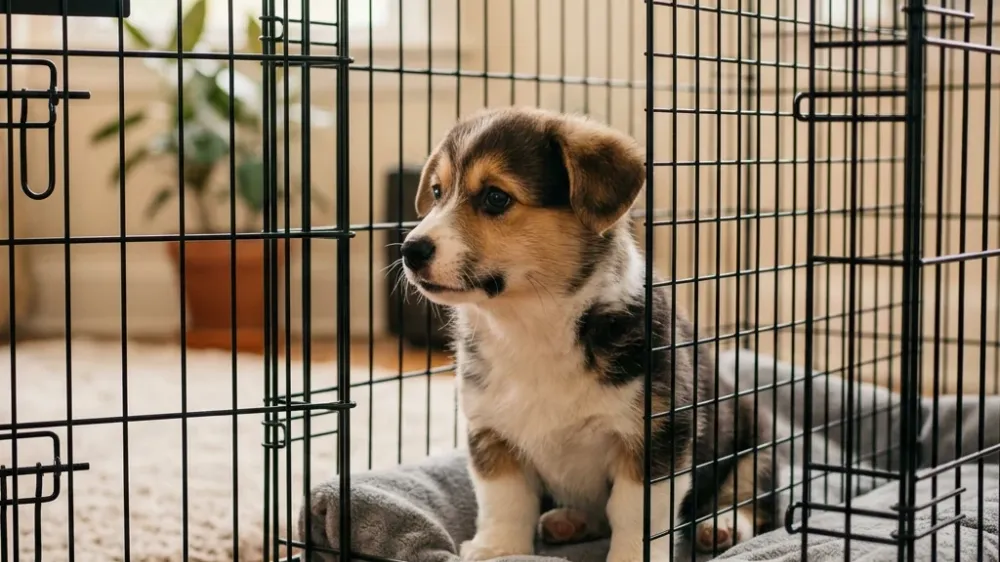
Selecting the right crate is the most critical gear decision you will make when bringing a new puppy home. A well-designed crate serves as a safe sanctuary, leverages your puppy’s natural den instinct, and drastically speeds up housebreaking. Choosing an improper style or size, however, can lead to stress, escape attempts, and persistent potty training setbacks.
To establish successful routines early, see our guide on how to crate train a puppy overnight.
📋 In This Guide
Types of Puppy Crates Compared#
Puppy crates are manufactured in four main styles. Each material serves specific operational needs depending on your puppy’s size, temperament, and your travel habits.
1. Wire Metal Crates#
Wire crates are the industry standard for housebreaking. They offer maximum airflow, complete visibility, and easy cleaning. Most importantly, quality wire crates include an adjustable divider panel, allowing the internal size to expand as your puppy grows.
- Best for: General home use, housebreaking, warm climates, and growing breeds.
- Drawbacks: Heavier to move, exposed visual triggers can increase vocalization in reactive puppies.
2. Heavy-Duty Plastic Crates#
Plastic shell crates offer a dark, cozy, den-like atmosphere that provides a strong sense of security for anxious puppies. They are also mandatory for airline travel.
- Best for: Travel, nervous puppies, drafty homes, and dark sleeping conditions.
- Drawbacks: Fixed interior dimensions (cannot add a divider panel), reduced airflow, harder to clean thoroughly.
3. Soft-Sided Fabric Crates#
Constructed from nylon or canvas over a folding metal frame, soft crates are lightweight and extremely portable.
- Best for: Fully crate-trained puppies, travel, camping, and short outings.
- Drawbacks: Easily destroyed by sharp puppy teeth or claws; entirely unsuitable for unsupervised potty training.
4. Furniture and Wooden Crates#
Designed to blend seamlessly into home decor as end tables or credenzas, these crates utilize wood or metal lattice.
- Best for: Adult dogs with solid crate manners in primary living areas.
- Drawbacks: Absorbs urine spills, vulnerable to puppy chewing, costly, and lacks a flexible growth divider.
Puppy Crate Comparison Matrix#
| Crate Type | Durability | Ventilation | Cleaning Ease | Ideal for Housebreaking? |
|---|---|---|---|---|
| Wire Mesh | High | Excellent | Very Easy | Yes (Best Overall) |
| Plastic Travel | High | Moderate | Moderate | Yes (Requires correct sizing) |
| Soft Fabric | Low | Moderate | Difficult | No (Chew risk) |
| Wooden Furniture | Low/Medium | Low | Poor | No (Absorbs moisture) |
Key Features Every Puppy Crate Must Have#
When evaluating specific models, verify that the crate includes these four non-negotiable features:
- Adjustable Divider Panel: Allows you to adjust the length of the living space. If a crate is too large, a puppy will sleep in one corner and eliminate in another.
- Slide-Out Plastic Tray: A removable bottom pan allows you to clean accidental potty messes without dismantling the frame.
- Secure Latching System: Look for slide-bolt latches that pause or lock into place, preventing clever puppies from jiggling doors open.
- Dual Doors: Crates with both front and side doors allow versatile placement against walls or inside vehicles.
MidWest iCrate Folding Metal Dog Crate
An industry-standard wire crate featuring an included divider panel, double-door access, and leak-proof plastic tray, perfect for growing puppies.
💡 Pro Tip: Measure your puppy from the tip of the nose to the base of the tail, then add 2 to 4 inches. The crate living area should allow your puppy to stand up without slouching, turn around comfortably, and lie down completely extended, but no larger.
Managing Crate Setup and Safety#
Location and safety protocols determine how quickly your puppy adjusts to crate life. Place the crate in a quiet corner of a busy room, such as the living room or bedroom. Avoid cold garages, isolated laundry rooms, or drafty hallways.
Bedding and Safety Rules#
- Skip Plush Beds Initially: Chewing-prone puppies can easily ingest fiberfill, leading to intestinal blockages. Use flat, chew-resistant crate pads or simple towels until potty training is reliable.
- Remove Collars and Tags: Always remove your puppy’s collar, harness, or tags before placing them inside the crate to eliminate strangulation risks on wire grates.
- Provide Safe Enrichment: Leave durable chew items inside the crate to create positive associations. Check our recommendations for the best toys for a teething puppy to select chew-safe options.
If nighttime whining or barking occurs during the early adjustment phase, follow our step-by-step strategy on how to stop puppy barking at night.
Search Intent FAQ: Puppy Crates#
How big should a puppy’s crate be during housebreaking?#
The crate interior should only be large enough for the puppy to stand, turn around, and lie down extended. If the crate is larger than this, the puppy may use one end as a bathroom and sleep comfortably in the other, defeating the housebreaking mechanism.
Should I cover my puppy’s wire crate with a blanket?#
Covering three sides of a wire crate with a breathable sheet or specialized crate cover can significantly reduce visual stimuli and create a dark, soothing environment. Always leave the front panel open for adequate airflow, and remove the cover immediately if your puppy attempts to pull the fabric through the bars and chew it.
How long can a puppy stay in a crate?#
A general rule of thumb for crate duration is the puppy’s age in months converted to hours, plus one hour. For example, a 2-month-old puppy can hold their bladder for a maximum of 3 hours. Do not exceed this limit during daytime training, as forcing a puppy to hold their bladder too long leads to distress and unwanted crate accidents.
Summary: Action Plan for Crate Success#
- Select a Dual-Door Wire Crate: Buy a model sized for your puppy’s projected adult weight that includes a divider panel.
- Set Up the Divider: Partition the interior so your puppy only has room to turn around and lie down.
- Establish Safe Bedding: Use a washable, low-profile pad and remove all collars prior to crating.
- Build Positive Value: Feed meals inside the crate and leave the door open during short, fun training games.