Stopping a puppy from barking at night requires identifying whether the vocalization stems from separation anxiety, a physical need to eliminate, or attention-seeking behavior. Young puppies transition into new home environments with a natural instinct to stay close to their littermates, making isolation in a dark sleeping area alarming. By structuring the evening, managing late night potty breaks, and practicing quiet time in the crate during the day, you can get to quiet nights within a few days.
📋 In This Guide
Step 1: Identify the Root Cause of Nighttime Barking#
Before changing anything, work out why your puppy is barking. Responding incorrectly to one type of barking can inadvertently reinforce bad habits or ignore legitimate distress.
| Bark Type | Characteristics | Root Cause | Proper Immediate Action |
|---|---|---|---|
| Distress Crying | High-pitched whining, frantic yelping, pacing | Separation anxiety, fear of isolation | Move crate closer; provide comfort items |
| Bathroom Request | Sudden alert barking after quiet sleeping | Bladder pressure, bowel necessity | Calm, quiet, business-only potty trip outdoors |
| Demand Barking | Sharp, intermittent barks paired with pawing | Boredom, seeking attention or freedom | Strict non-engagement; withhold attention |
Separation Anxiety and Fear#
During their first weeks in a new environment, puppies experience significant isolation distress. When left alone in the dark, instinct tells them that separation from the pack is dangerous. This results in continuous high-pitched whining or crying that increases in intensity.
Physical Needs#
Young puppies have limited bladder capacity. A general formula for bladder retention during sleep is one hour per month of age plus one hour, though eight to twelve-week-old puppies rarely sleep longer than four to five hours without needing a potty break. If your puppy sleeps soundly for several hours and suddenly starts whining, they likely need to go outside.
Demand Barking#
If you consistently answer nighttime crying by letting the puppy out of the crate, feeding them treats, or taking them into your bed, they quickly learn that barking gives them complete control over your attention. Demand barking tends to be repetitive, sharp, and intentional.
Step 2: Optimize the Evening and Bedtime Routine#
A calm night begins hours before you lay down to sleep. A predictable evening routine helps your puppy wind down and learn that night means rest.
Regulate Food and Water Intake#
To reduce middle-of-the-night bathroom emergencies, schedule your puppy’s last meal four hours before bedtime. Pick up the water bowl approximately two hours before sleep. Allow minor sips after energetic play, but limit full access to cut down on overnight potty trips.
Balance Evening Activity#
Engage your puppy in physical exercise and mental stimulation roughly one to two hours before bedtime. Short outdoor play sessions, gentle fetch, and interactive training games work off excess energy. Add a few minutes of easy training, like practicing how to teach a puppy to sit, to tire out their mind.
Avoid high-arousal play right before putting the puppy to bed. Transition into quiet cuddling, gentle handling, or brush grooming during the final 30 minutes before sleep.
Execute a Final Potty Sequence#
Take your puppy to their designated outdoor spot immediately before crate entry. Keep the final trip low-key with minimal talking or enthusiasm. Wait until they fully empty their bladder and bowels so you know any vocalization that follows inside the crate is not driven by physical necessity. For comprehensive housebreaking strategies, follow our complete guide on how to potty train a puppy.
Step 3: Create a Calming Sleep Environment#
Where your puppy sleeps and how comfortable it is make a big difference to overnight noise. Good placement helps a new puppy feel safe.
Position the Crate Strategically#
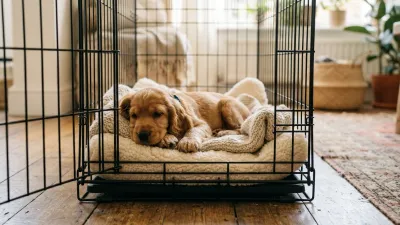
Place the crate in your bedroom near your bed for the first one to two weeks. Hearing your breathing and smelling your presence reassures the puppy that they are safe. Once your puppy sleeps through the night consistently without crying, you can gradually shift the crate to its permanent location over several days if desired.
Practice crate time during the day as well (Step 5 below shows how). A puppy that hates the crate during the day will rarely settle in it at night. For comfort items that help some puppies settle, see our picks for the best puppy calming aids for night.
Original Snuggle Puppy Behavioral Aid Toy
A plush toy with a pulsing heartbeat and an optional warm pack that helps many puppies settle at night.
Control Light, Sound, and Temperature#
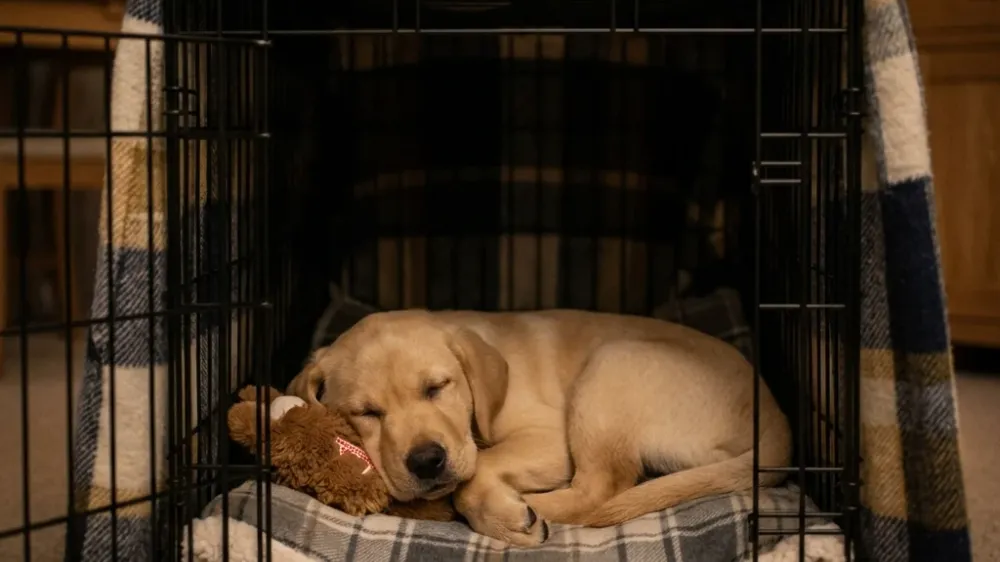
- Cover the Crate: Use a breathable crate cover or light blanket over three sides to block visual stimuli while maintaining airflow.
- Use Sound Masking: A white noise machine or low fan drowns out house noises, footsteps, and street sounds that trigger alert barking.
- Regulate Temperature: Puppies struggle to regulate body heat. Keep the crate away from drafts, heating vents, or direct air conditioners.
💡 Pro Tip: Place an unwashed t-shirt you have worn for a full day inside the crate. Your familiar scent comforts many puppies during the first nights alone.
Step 4: Execute the Correct Response Strategy#
When your puppy barks in the middle of the night, how you react determines whether the behavior stops or becomes a lingering problem.
Handling Potential Potty Requests#
If your puppy wakes up barking after sleeping quietly for a few hours, treat it as a potential potty break.
- Put on their leash inside the crate without speaking or making eye contact.
- Carry or lead them directly to their outdoor bathroom spot using a calm, silent approach.
- Give them three to five minutes to eliminate. Do not allow playing, sniffing off-target areas, or exploring.
- If they eliminate, praise softly, return them immediately to the crate, and close the door.
- If they do not eliminate within five minutes, place them straight back inside the crate.
By keeping this interaction brief, boring, and strictly business, your puppy learns that night outings are for bathroom relief, not play.
Responding to Demand Barking#
If you know your puppy’s physical needs are met, they have eliminated recently, and they are crying purely for attention, hold back all interaction.
- Do not yell, talk to, or glance at the puppy.
- Do not touch or tap the crate door.
- Do not let the puppy out while they are actively vocalizing.
- Wait for a minimum window of 10 to 15 seconds of complete silence before approaching or opening the crate.
Any attention, even negative attention like telling the dog to be quiet, serves as a reward that prolongs demand barking.
Demand barking usually sounds sharp and repetitive, with short pauses while your puppy checks whether you are coming, and it tends to fade once you are fully out of sight. Panic looks different: nonstop high-pitched crying or howling, panting, drooling, digging at the crate, and noise that gets worse when you leave. If you see those signs, do not ignore them; read our guide on how to deal with puppy separation anxiety.
Step 5: Fix Crate Barking During the Day#
A puppy that barks in the crate during the day will rarely be quiet in it at night, so practice in daylight when you are not rushing off to work or bed.
Meet Needs Before Crate Time#
Never crate a wound-up puppy with a full bladder. Give 15 minutes of play, a short training session, and a potty break first. If your puppy turns mouthy when overtired, our guide on how to stop a puppy from biting hands helps keep the lead-up calm.
Make the Crate the Best Spot in the House#
Feed meals inside the open crate, and save long-lasting chews for crate time only. A rubber toy stuffed with canned puppy food or plain Greek yogurt and frozen overnight gives your puppy a calm, licking job that pulls their focus away from barking.
Practice the Silent Exit and Return Game#
- Cue your puppy into the crate and toss in a treat.
- Close the door, sit right beside the crate for 30 seconds, and reward quiet.
- Stand up and step back two paces. If your puppy stays quiet, reward.
- Walk out of the room for 5 seconds, come back, and reward the silence.
- Slowly build the time out of sight from 10 seconds to several minutes.
If your puppy starts barking, you went too far too fast. Go back to an easier step where your puppy succeeds.
💡 Pro Tip: Opening the crate door while your puppy is barking teaches them that noise equals freedom. Even when you are in a hurry, wait for a short stretch of silence before you unlatch the door.
What Not to Do When Your Puppy Barks in the Crate#
- Do not yell “Quiet”: To your puppy it sounds like you are barking along, and it is still attention.
- Do not shake the crate or spray water: Punishment makes the crate scary and can turn simple demand barking into real anxiety.
- Do not open the door during a barking fit: It locks in the idea that barking gets them out.
- Do not isolate the crate too early: Keep it in your bedroom or a busy room at first so your puppy feels part of the family.
Frequently Asked Questions#
Should I let my puppy cry it out at night?#
No, you should not let a young puppy cry indefinitely without checking their needs. While demand barking should be ignored, genuine distress barking or physical distress indicates panic or an urgent need to eliminate. Allowing a puppy to panic in a crate creates long-term negative associations with crate confinement and heightens separation anxiety.
How long does it take for a puppy to stop barking at night?#
When following a structured bedtime routine and consistent response strategy, most puppies adapt and stop barking within three to seven nights. Everyone in the house needs to respond the same way for this to work quickly.
What if my puppy soils the crate while barking?#
That usually means a potty break was overdue or your puppy was very stressed. Never punish an accident in the crate. Clean it with an enzymatic cleaner to remove the scent, shorten crate time, and adjust the potty schedule. If accidents keep happening, check with your vet to rule out a medical cause.
Where should my puppy sleep on their first night home?#
Your puppy should sleep in a crate or secure playpen placed right next to your bed. Being close to you minimizes nighttime fear, allows you to hear when they need an emergency potty break, and builds trust while they transition into your home environment. Once your puppy is settled into the routine and gaining confidence through early socialization before vaccines, moving the crate becomes much easier. For the first few nights, see our guide on how to crate train a puppy overnight.
Summary: Your 7-Day Nighttime Peace Action Plan#
Stopping nighttime barking relies on consistency, patience, and clear boundaries. Implement this streamlined action checklist to restore quiet sleep in your home:
- Establish Strict Evening Schedules: Cut off food four hours before bed and limit water intake two hours prior.
- Provide Balanced Exercise: Combine moderate physical play with structured mental training early in the evening.
- Set Up an Optimal Sleep Zone: Keep the crate in your bedroom, use a crate cover, add white noise, and include scent items or comfort plush toys.
- Enforce Boring Potty Runs: Conduct late night elimination trips in silence with zero play or engagement.
- Reward Only Silence: Never open the crate door or offer attention while your puppy is actively vocalizing.
- Practice in Daylight: Run short exit-and-return drills during the day so the crate feels safe before bedtime.