Puppy teething begins around 12 to 16 weeks of age, as their 28 razor-sharp baby teeth begin shedding to make way for 42 permanent adult teeth. Losing those teeth makes the gums sore, and the result is a strong, constant urge to chew. The right teething toys do more than save your furniture: they ease the soreness and teach your puppy early on what is okay to chew.
Selecting the correct toys should be at the top of your key puppy supply checklist before you bring your new companion home. This guide covers the safest teething toys, how to match them to your puppy’s chew style (including power chewers), and how to use them to build good habits that last.
📋 In This Guide
Understanding the Puppy Teething Timeline#
To manage your puppy’s chewing habits, you must understand what is happening inside their mouth. The teething process generally follows a predictable timeline:
- Weeks 2 to 4: Baby teeth begin to emerge from the gums.
- Weeks 5 to 8: All 28 baby teeth are fully present. Puppies begin learning bite inhibition with littermates.
- Weeks 12 to 16: Baby teeth start falling out. This is the official onset of the teething phase, where gum swelling and discomfort peak.
- Months 6 to 8: Most adult teeth have fully erupted, and the teething discomfort subsides. However, the urge to chew remains strong as adult jaws settle.
Knowing this schedule helps you prepare for the high-intensity chewing window between three and six months of age.
Comparison of Teething Toy Types#
Different toys serve different functions during the teething cycle. The table below outlines the primary categories, their optimal uses, and safety risk profiles.
| Toy Category | Primary Benefit | Durability Level | Safety Risk Level | Best For |
|---|---|---|---|---|
| Natural Rubber | High durability, gentle resistance | Excellent | Low | Solo chewing, food redirection |
| Freezable Toys | Numbs sore gums, reduces swelling | Medium | Low to Medium | Peak teething days, high inflammation |
| Nylon Chews | Long-lasting durability for hard chewers | Very High | Medium (risk of tooth fracture if too hard) | Power chewers, older puppies |
| Rope & Fabric | Massages gums, cleans teeth | Low | High (if fibers are swallowed) | Supervised interactive play, tug |
The 4 Best Categories of Toys for Teething Puppies#
1. Pliable Natural Rubber Toys#
Natural rubber is the best all-round material for puppy teething. It has a good balance of give and resistance: the material yields slightly to thumbnail pressure, which cushions sore gums, yet it is durable enough to withstand repeated chewing without shredding.
Many rubber toys are designed with hollow centers. Stuffing these toys with kibble and freezing them keeps your puppy busy while cooling sore gums. You can also feed part of a meal this way as part of your puppy feeding schedule, which slows down fast eaters.
KONG Puppy Toy
The classic, durable natural rubber toy designed specifically for a teething puppy's growing teeth and sore gums.
2. Freezable and Soothing Cooling Toys#
Cold helps numb sore puppy gums and takes the edge off the ache that drives so much chewing.
- Water-Fillable Rubber: Some specialized TPE (thermoplastic elastomer) toys allow you to fill them with water and freeze them. As the puppy chews, ice-cold water slowly escapes, providing continuous cooling.
- Frozen Wet Washcloths: A budget-friendly alternative is to wet a clean cotton washcloth, roll it up tightly, freeze it solid, and hand it to your puppy under direct supervision. The textured frozen fabric gently massages the gumline.
3. Textured Dental Chews#
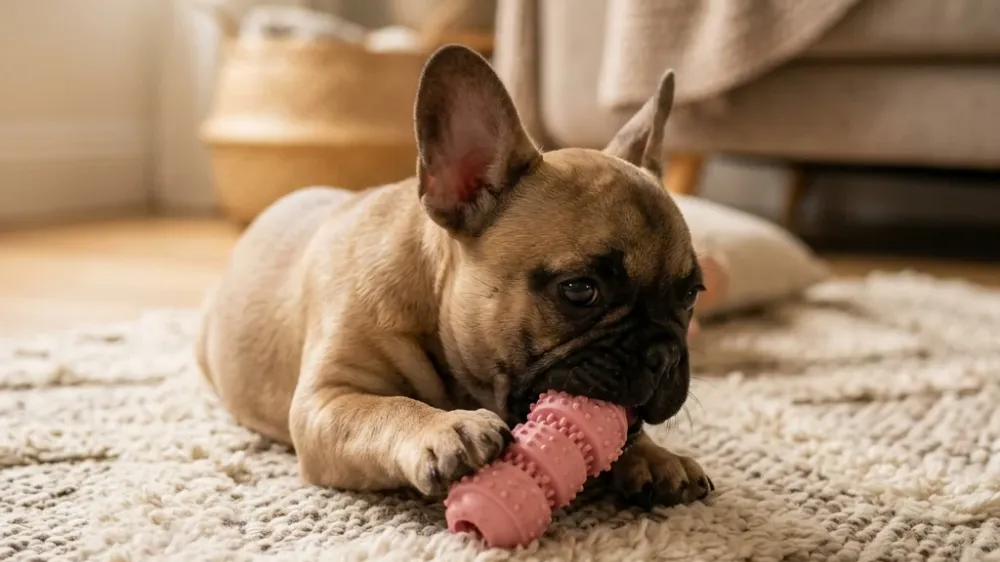
Textured toys feature ridges, nubs, and bumps that run along the surface. When a puppy bites down on these patterns, the raised elements rub along the gumline and help scrape the teeth.
Look for textured toys made from softer polyurethane or soft TPE rather than ultra-hard nylon for puppies under six months. Hard nylon can sometimes be too rigid for fragile baby teeth, increasing the risk of painful dental fractures.
Nylabone Puppy Teething Keys
A durable textured nylon chew toy featuring multi-texture keys that clean teeth, massage gums, and encourage healthy chewing habits.
4. Soft Fabric Crinkle Toys (Supervised Use Only)#
During the early stages of teething, puppies often crave soft materials that mimic the feel of littermates or prey. Fabric toys with built-in crinkle paper or squeakers offer excellent mental stimulation. However, because puppies can quickly rip fabric apart and swallow the squeaker or stuffing, these must never be left in a crate or unsupervised area.
⚠️ Safety Warning: Never leave a puppy unattended with plush, fabric, or rope toys. If a puppy swallows synthetic stuffing, fabric pieces, or long rope strands, it can cause a life-threatening intestinal blockage (linear foreign body obstruction) that requires emergency surgery. Regularly inspect all toys for cracks, tears, or loose parts, and discard damaged items immediately.
Pros & Cons of Common Teething Materials#
Natural Rubber#
- Pros: Highly durable, puncture-resistant, non-toxic, dishwasher-safe for easy sanitization.
- Cons: Can be heavy for very small toy breeds; typically more expensive than cheap plastic alternatives.
- Best for: Daily chewing sessions, crate comfort, and mental enrichment.
- Example Case: A heavy-chewing breed like a golden retriever puppy will require highly durable, thick natural rubber to prevent pieces from breaking off.
Thermoplastic Elastomer (TPE)#
- Pros: Lightweight, flexible, often float in water, highly elastic.
- Cons: Not as heat-resistant as vulcanized rubber; can be torn by extreme power-chewers.
- Best for: Young puppies with highly sensitive gums.
Cotton Rope#
- Pros: Helps clean plaque from teeth, excellent for interactive play.
- Cons: Quickly frays, poses a severe ingestion hazard if fibers are swallowed.
- Best for: Supervised games of tug-of-war, not for solo chewing.
How to Introduce and Rotate Teething Toys#
To prevent your puppy from losing interest in their toys and turning their attention to your baseboards, rugs, or shoes, implement a structured toy rotation system:
- Limit Access: Do not leave all of your puppy’s toys scattered on the floor. Keep only two or three accessible at any given time.
- Rotate Daily: Swap out the active toys every 24 to 48 hours. A toy that has been hidden in a closet for three days feels brand-new to a young puppy when reintroduced.
- Vary Textures: Make sure the active rotation includes different textures: one hard rubber toy, one cool frozen toy, and one textured chew.
If your puppy targets your hands or clothing with their sharp teeth, do not yell or pull away quickly, as this can trigger a chase instinct. Instead, use a calm, neutral word to end play, redirect their mouth to a rubber toy, and praise them the moment their jaws close on the toy. This kind of redirection is the heart of stopping a puppy from biting hands.
Stuffed, frozen rubber toys inside a crate are also a great way to build positive associations when crate training a puppy overnight. Chewing and licking are naturally calming for most puppies, and many will settle and nap once the toy is empty.
Toys for Power Chewers and Aggressive Chewing Puppies#
Some puppies, especially high-drive and larger breeds, shred soft toys in minutes. For them, the challenge is finding something tough enough to survive their jaws without being so hard that it cracks a baby tooth. Hard materials like thick nylon, bones, and antlers can chip young enamel, while flimsy rubber lets a strong chewer slice off pieces small enough to swallow. Thick, high-density natural rubber made for puppies sits in the middle.
⚠️ Safety Warning: Avoid hard adult nylon bones, marrow bones, cow hooves, and antlers for puppies under 6 months old. Young teeth chip and crack easily, and rigid materials do not give under pressure.
What to Look for in a Heavy-Duty Teething Toy#
- Thick Puppy Rubber: Choose the next size up and the thickest walls you can find. A stuffed, frozen KONG Puppy is still the first thing we hand a power chewer.
- Textured Surfaces: Ribs, nubs, and grooves rub sore gums while the puppy chews.
- Hollow Centers for Freezing: Fill with wet food, plain pumpkin, or sodium-free broth and freeze for 4 to 6 hours. Frozen fillings slow down a strong chewer and cool the gums at the same time.
- Bounce Back: Good material stretches and springs back when teeth sink in instead of tearing into sharp pieces.
Material Guide for Strong Chewers#
| Material Type | Durability | Dental Safety | Best Used For |
|---|---|---|---|
| Natural Puppy Rubber | High | Good | Daily chewing, stuffed frozen treats, fetch |
| Pliable TPR (Thermoplastic) | Moderate to High | Good | Interactive games, textured gum rubbing |
| Soft Plush and Latex | Very Low | Poor for strong chewers | Cuddling only, with supervision |
| Heavy Braided Rope | Moderate | Fair | Supervised tug; remove once threads fray |
| Rigid Nylon or Antlers | Extreme | Poor (high risk) | Not for puppies under 6 to 8 months |
| Frozen Cloth or Canvas | Low | Good | Short, supervised cooling sessions |
The Thumbnail Test#
Before handing your puppy any hard chew, press your thumbnail firmly into it. If it does not give a little or leave a faint mark, it is too hard for puppy teeth.
Why a Gentle Chewer Suddenly Turns Destructive#
Between about 4 and 7 months, the adult molars come in at the back of the mouth. Puppies chew harder with their back teeth to relieve that pressure, so toys that lasted for weeks can suddenly fall apart. Check every toy daily for tears, flaking edges, or missing chunks, and toss anything damaged.
Strong chewers also chew less when they are mentally tired. A couple of short sessions a day with interactive brain toys for puppies takes the edge off. Leash work on a well-fitted harness or collar helps build impulse control too.
Frequently Asked Questions#
How can I tell if my puppy is teething or just being destructive?#
Teething chewing usually comes with physical signs: increased drooling, swollen or red gums, mild bad breath, and occasionally small spots of blood left on their toys. Destructive chewing that occurs when a puppy is left alone and is not accompanied by physical signs of gum soreness may point to separation anxiety or lack of mental stimulation.
Is it normal for a puppy’s gums to bleed a little while chewing?#
A few small spots of blood on toys during peak teething are common as baby teeth loosen. Heavy bleeding, very swollen gums, or a baby tooth still in place next to an adult tooth is worth a call to your vet.
Can I give my teething puppy ice cubes?#
Yes, but with caution. Plain ice cubes can be a soothing treat for a teething puppy, but very hard, large ice cubes can occasionally fracture fragile puppy teeth. A safer alternative is to freeze low-sodium bone broth or water in flexible silicone molds to create softer, easily crushable ice treats.
What should I do if my puppy swallows a piece of a toy?#
If you suspect or witness your puppy swallowing a piece of rubber, plastic, fabric, or rope, contact a veterinary clinic immediately. Do not attempt to induce vomiting at home unless specifically instructed to do so by a veterinarian.
Summary: Your Teething Puppy Action Plan#
To get through the teething phase with your furniture and your patience intact, follow this three-part plan:
- Inspect and Secure: Clear your floors of dangerous items like shoes, socks, and power cords. Establish a designated toy box with safe, durable rubber and TPE teething toys.
- Prepare Frozen Relievers: Keep at least two stuffed rubber toys or damp, rolled-up washcloths in your freezer at all times so you always have a cold chew ready to soothe inflamed gums.
- Enforce Rules through Redirection: Never allow your puppy to chew on hands or furniture. Always keep a high-value teething toy within arm’s reach to redirect inappropriate biting immediately, building good habits that will carry into adulthood.