Young puppies do not yet have the body fat, coat, or temperature control of an adult dog, which makes freezing weather harder on them. Exposing a young dog to snow, ice, and sub-zero wind chills without protective winter clothing and booties increases the risk of hypothermia and paw pad damage. Equipping your puppy with proper cold-weather apparel keeps outdoor potty breaks and exercise sessions safe throughout the coldest months of the year.
Selecting the right gear requires balancing thermal insulation, weatherproofing, proper fit, and overall comfort. In this guide, we break down how to choose warm, practical coats, select protective booties, and train your puppy to accept winter gear without stress.
📋 In This Guide
Why Puppies Need Winter Clothing and Booties#
Unlike adult dogs with full undercoats, young puppies have thin hair and tender skin. Small and toy breeds lose body heat even faster due to their high surface-area-to-mass ratio. Cold ground temperatures combined with biting winds quickly drain a puppy’s body heat during outdoor outings.
Paw protection matters just as much on winter walks. Standard ice-melt chemicals, rock salt, and toxic anti-freeze irritate delicate paw pads, cause chemical burns, and pose severe poisoning risks if ingested during self-grooming. Additionally, freezing slush accumulates between toes, forming hard ice balls that cut skin and tear tissue.
Proper paw prep starts before putting gear on. Long nails force boots to twist out of alignment, so keep your puppy’s claws trimmed using the right gear outlined in our guide to the best puppy nail trimmers and grinders.
How to Choose the Best Winter Coat for Your Puppy#
Not all winter coats offer equal protection against cold weather elements. A stylish sweater might look great indoors, but outdoor winter gear must defend against wet snow, biting wind, and freezing mud.
Key Features of High-Quality Puppy Jackets#
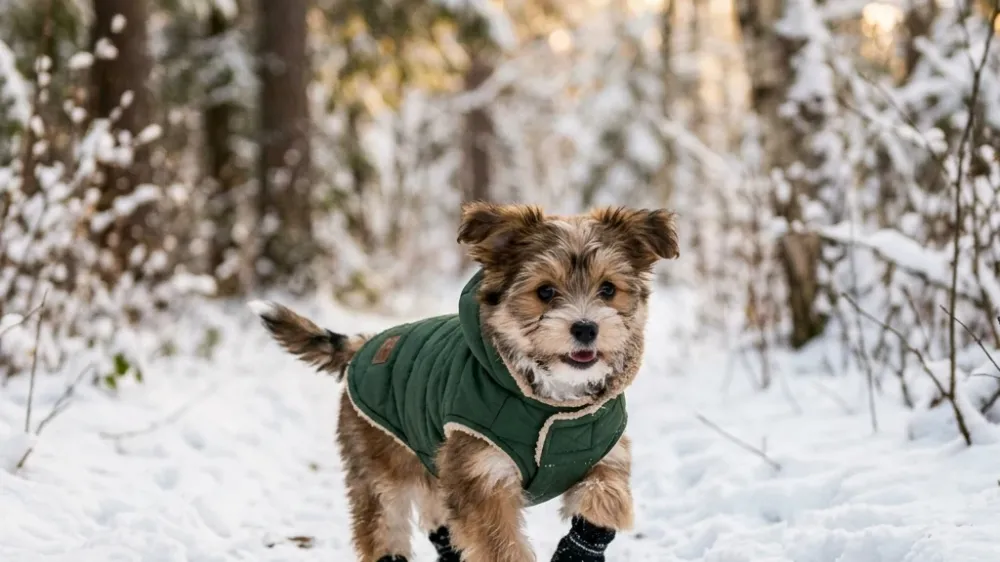
- Waterproof Outer Shell: Look for nylon or polyester fabrics treated with durable water repellent coatings to prevent melting snow from soaking through to the skin.
- Thermal Fleece or Down Insulation: Soft inner linings trap body heat near the skin without adding excess bulk that restricts natural movement.
- Full Chest and Belly Coverage: Puppies walk low to the ground, leaving their bellies exposed to snowdrifts and wet pavement. Wraparound belly panels keep that area warm and dry.
- Leash and Harness Portals: Winter jackets should fit comfortably over your pup’s walking equipment. Make sure the coat features a dedicated leash opening designed to work alongside your preferred harness setup. Our breakdown of the best harness vs collar for puppies helps you pick a setup that works under a coat.
- Adjustable Hook-and-Loop Straps: Because puppies grow rapidly, coats with wide adjustment panels allow you to modify the fit over several weeks of growth.
Winter Booties: Protecting Delicate Puppy Paws#
Booties are a barrier against frozen pavement, jagged ice, and harsh chemicals. However, getting a young dog to wear booties requires selecting the right style and introducing them systematically.
Types of Winter Puppy Booties#
- Flexible Rubber Booties: Made of thin, water-resistant rubber, these lightweight booties offer excellent ground feel. They are ideal for young puppies adjusting to footgear for the first time.
- Neoprene Weather Booties: Insulated and water-resistant, neoprene boots feature soft soles that protect against freezing temperatures while allowing flexible paw movement.
- Rugged All-Terrain Snow Boots: Built with thick rubber treads and heavy insulation, these boots suit long outdoor hikes in deep snow and ice. They require precise sizing to prevent slipping off.
Acclimating Your Puppy to Booties#
Most puppies react to booties by lifting their feet high, shaking their paws, or freezing in place. Follow this step-by-step acclimation strategy indoors before heading out into the snow:
- Step 1: Let your puppy sniff the booties while offering high-value treats to create a positive association.
- Step 2: Place a bootie on one front paw, fasten it securely, reward immediately with treats, and remove it after ten seconds.
- Step 3: Put booties on both front paws and encourage forward movement across carpeted floors using verbal praise.
- Step 4: Equip all four paws and distract your puppy immediately with engaging play sessions. Keep them focused on physical activities or work their minds using the best interactive brain toys for puppies.
💡 Pro Tip: Always inspect your puppy’s paw pads immediately after winter walks. Wipe off residual salt, ice, and moisture with a warm towel to prevent chemical burns and stomach upset caused by licking.
Winter Apparel Comparison: Finding the Right Match#
| Gear Type | Primary Benefit | Best For | Cold Weather Rating |
|---|---|---|---|
| Fleece Sweaters | Breathable warmth | Mild cold dry days (45°F+) | Light |
| Insulated Raincoats | Water and wind resistance | Wet slushy snow (35°F+) | Moderate |
| Full-Coverage Parkas | Maximum heat retention | Deep winter cold (Below 32°F) | Heavy |
| Rubber Booties | Salt barrier and traction | Ice and salted sidewalks | Moderate |
| Insulated Snow Boots | Severe cold and pad protection | Deep snow and frozen trails | Heavy |
Breed Considerations and Nutrition Support in Cold Weather#
Small toy breeds like Pomeranians and Chihuahuas have little body fat, so a coat is a good idea any time temperatures drop below freezing. Short-coated breeds such as Whippets and Boxers feel the cold quickly too.
Keeping warm burns energy, and very active puppies that spend a lot of time outdoors in winter may need a little more food. Weigh your puppy regularly, check our guide on how many calories a growing puppy needs, and talk to your vet before making big changes to portions.
Frequently Asked Questions#
At what temperature does a puppy need a winter coat?#
Many puppies benefit from a winter coat when outdoor temperatures fall below 45°F (7°C). For small breeds, short-haired breeds, or young puppies under four months of age, a coat can help at 50°F (10°C) or lower, especially in damp or windy conditions.
How do I measure my puppy for winter clothes and booties?#
For coats, measure your puppy’s back length from the base of the neck to the base of the tail, as well as the widest part of their chest girth. For booties, place your puppy’s paw on a piece of paper, mark the widest points of the paw while it bears weight, and measure the width carefully.
How do I keep booties from falling off my puppy?#
Make sure you choose booties with dual hook-and-loop straps or adjustable ankle fasteners. Secure the lower strap firmly around the narrow part of the ankle above the paw pad. If booties continue slipping, check if long hair or untrimmed nails are interfering with the fit.
Summary: Puppy Winter Readiness Action Plan#
Keeping your puppy safe and comfortable throughout the winter requires preparation, proper gear selection, and patient desensitization. Measure your pup accurately, prioritize waterproof shells and insulated linings, and protect tender paw pads from dangerous salts and ice build-up. By acclimating your puppy to coats and booties early using positive rewards, you turn cold-weather walks into safe, pleasant outdoor adventures.