Yes, puppies can safely eat peanut butter, provided it does not contain toxic ingredients like xylitol and is offered in strict moderation. Peanut butter makes a great high-value reward during crate time, training, and grooming. Because it is high in fat and calories, keep portions small to avoid stomach upset and weight gain.
⚠️ Safety Warning: Always check the ingredient label before giving peanut butter to your puppy. Some manufacturers use xylitol (which may also be labeled as birch sugar, wood sugar, or E967), a natural sweetener substitute. Xylitol triggers a rapid, massive insulin release in dogs, causing severe hypoglycemia (low blood sugar), seizures, liver failure, or death within hours.
📋 In This Guide
Nutritional Benefits and Risks for Growing Puppies#
Plain peanut butter contains:
- Plant-Based Protein: A small extra on top of the animal protein in your puppy’s food.
- Monounsaturated Fats: Mostly unsaturated fat, though it is still very calorie dense.
- Niacin (Vitamin B3) and Vitamin E: Present in small amounts.
- Dietary Fiber: A little fiber.
Peanut butter is very dense in calories and fat. Too much can cause digestive upset, and very fatty foods are a known trigger for pancreatitis. If your young dog often has soft stools or food sensitivities, talk to your vet before adding rich treats like nut butters.
How Much Peanut Butter Can a Puppy Eat?#
To keep your puppy healthy, adhere strictly to the 10% Rule: treats and supplemental human foods must never exceed 10% of a puppy’s total daily caloric allowance. The remaining 90% of their daily nutrition must come from a complete and balanced primary puppy diet.
Daily Serving Guidelines by Weight#
| Puppy Weight | Recommended Daily Max Portion | Caloric Approximation |
|---|---|---|
| Under 5 lbs | 1/2 Teaspoon | ~15 kcal |
| 5 to 10 lbs | 1 Teaspoon | ~30 kcal |
| 10 to 20 lbs | 1.5 Teaspoon | ~45 kcal |
| 20 to 40 lbs | 1 Tablespoon | ~90 kcal |
| Over 40 lbs | 1.5 Tablespoons | ~135 kcal |
💡 Pro Tip: Always coordinate treat delivery with your established puppy feeding schedule by age. Feeding rich treats directly before scheduled kibble meals can make your puppy a picky eater or cause them to refuse balanced nourishment.
How to Choose the Safest Peanut Butter#
Not all peanut butter jars on grocery store shelves are safe for dog consumption. Use this selection matrix to evaluate products before offering them to your puppy.
Peanut Butter Comparison Matrix#
| Peanut Butter Type | Safe for Puppies? | Key Ingredients to Look For | Ingredients to Avoid |
|---|---|---|---|
| Single-Ingredient Natural | Best Choice | Dry-roasted peanuts only | Added sugar, salt, palm oil, xylitol |
| Standard Commercial | Use Caution | Peanuts, minimal salt | Xylitol, hydrogenated oils, high sodium |
| Reduced Fat / Low Sugar | DO NOT USE | Peanuts | Xylitol, artificial sweeteners, sorbitol |
| Flavored (Chocolate/Honey) | NEVER | None (Avoid completely) | Cocoa, excessive sugar, synthetic flavorings |
Look for unsalted, all-natural peanut butter where peanuts are the sole ingredient. Separation of oil at the top of the jar is natural; simply stir the oil back into the jar before serving.
Safe Ways to Serve Peanut Butter to Your Puppy#
Offering peanut butter straight from a spoon is fine occasionally, but it is even more useful as part of an activity.
1. Interactive Stuffable Toys#
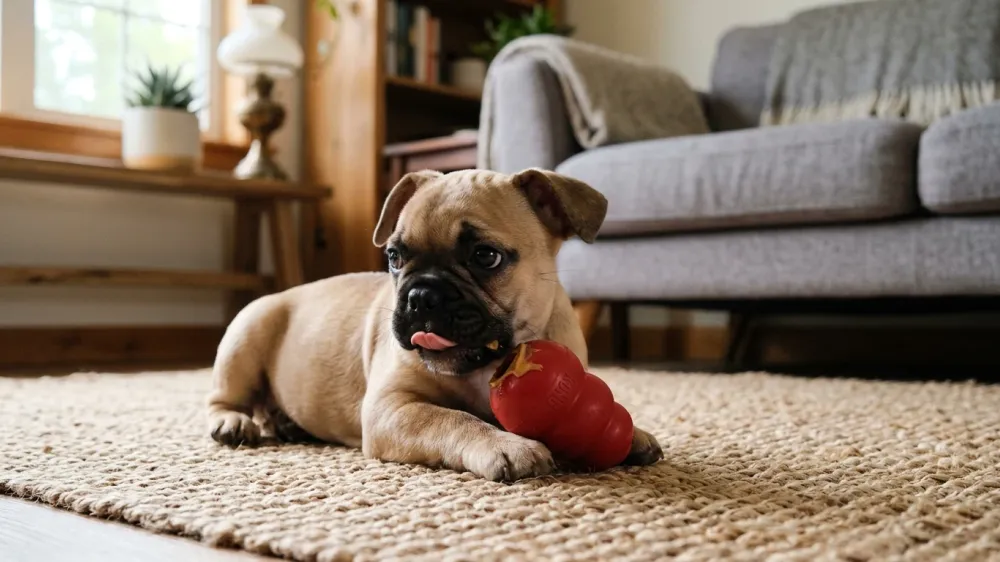
Stuffing a soft rubber enrichment toy with a teaspoon of plain peanut butter keeps puppies occupied, gives sore gums something to work on, and can make short alone-time practice easier. For more on that, see how to deal with puppy separation anxiety.
KONG Puppy Toy
A soft rubber puppy toy sized for growing teeth that you can stuff with a little plain peanut butter.
Freezing a stuffed toy makes it last much longer. For more enrichment ideas, explore our full guide on the best interactive brain toys for puppies.
2. Distraction During Grooming and Health Routines#
Spread a thin layer of peanut butter onto a textured silicone lick mat during baths, nail trims, or ear cleaning. Steady licking helps many puppies stay calm during handling.
This technique works exceptionally well around stress-inducing events, such as when your pup is due for their standard puppy vaccination schedule.
3. High-Value Training Rewards#
Fill a reusable squeeze tube with natural peanut butter to reward your puppy during heel-work training or crate acclimation. A single lick provides instant praise without disrupting the momentum of your training session.
When Can Puppies First Have Peanut Butter?#
You can introduce plain peanut butter as soon as your puppy transitions to solid kibble, usually around 6 to 8 weeks of age. Start with a tiny test amount (the size of a single pea) and observe your puppy for 24 hours to confirm no adverse reactions occur.
Signs of an Adverse Reaction or Intolerance:#
- Facial swelling or hives
- Excessive scratching or lick-dermatitis
- Loose stools or severe diarrhea
- Vomiting or extreme lethargy
- Excessive gas and abdominal bloating
If you observe any of these symptoms, stop the peanut butter and talk to your vet.
As your puppy grows into adulthood, their overall caloric requirements change. Keep track of caloric baseline adjustments as they mature, especially when learning how to transition a puppy to adult food. Breed size plays a significant factor in energy expenditure; for example, large breeds require specialized growth curves, which you can review in our guide on the best dog food for Golden Retriever puppies.
Frequently Asked Questions#
Can 8-week-old puppies eat peanut butter?#
Yes, 8-week-old puppies can eat peanut butter, but only in micro-portions (less than half a teaspoon). Make sure the peanut butter contains no xylitol, added sugars, or heavy sodium. Use it primarily as a mild distraction during early crate conditioning.
Can puppies eat crunchy peanut butter?#
Smooth peanut butter is preferred over crunchy peanut butter for young puppies. Large peanut fragments in crunchy varieties can pose a minor choking hazard for small or toy breeds and are harder for sensitive young digestive tracts to break down efficiently.
What should I do if my puppy accidentally consumes xylitol?#
If your puppy ingests any peanut butter containing xylitol, treat it as an immediate medical emergency. Transport your puppy to an emergency veterinary clinic right away. Do not wait for symptoms like dizziness, wobbling, or vomiting to appear, as blood sugar levels can crash quickly.
Summary: Safe Peanut Butter Action Plan#
- Check the Label: Inspect the entire ingredient list to confirm xylitol, wood sugar, or birch sugar are completely absent.
- Select Unsalted/Natural: Choose single-ingredient peanut butter containing only dry-roasted peanuts.
- Follow Portion Limits: Stick strictly to the 10% rule, adjusting portions according to your puppy’s weight.
- Use for Enrichment: Freeze peanut butter inside rubber toys or spread it on lick mats to aid crate training and grooming.
- Monitor Digestion: Introduce peanut butter gradually, watching for signs of stomach upset or allergic reactions.
💡 Related Guide: For a low-calorie fruit treat, see can puppies eat blueberries safely.