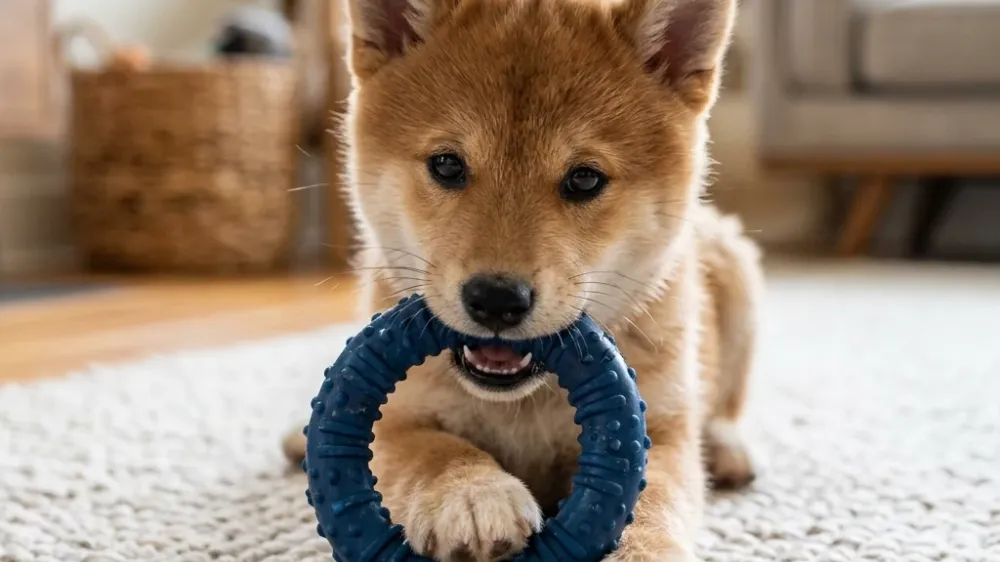
Puppy teething causes swollen gums, relentless mouthiness, and a constant urge to chew everything in sight. Young dogs chew to relieve pressure in their jawbones as milk teeth fall out and adult teeth push through. Managing this phase requires understanding your dog’s oral development, providing safe outlets for chewing, and protecting your household items.
Here is everything you need to know about the puppy teething timeline, identifying normal vs. abnormal symptoms, and keeping your pup safe and comfortable.
📋 In This Guide
The Complete Puppy Teething Timeline#
Puppies experience two distinct phases of dental growth. They are born without teeth, develop a set of 28 temporary baby teeth (deciduous teeth), and eventually replace them with 42 permanent adult teeth.
| Age Range | Dental Stage | What to Expect | Management Focus |
|---|---|---|---|
| 2 - 4 Weeks | Baby teeth erupting | Sharp incisors and sharp baby teeth start breaking through the gums. | Mother handles nursing; soft weaning food introduced. |
| 5 - 8 Weeks | Full set of baby teeth | All 28 puppy teeth are fully visible. High needle-sharp biting. | Early bite inhibition training and gentle redirection. |
| 12 - 16 Weeks | Adult teeth begin erupting | Deciduous incisors loosen and fall out; adult teeth emerge. | Provide chilled rubber toys; begin consistent oral checks. |
| 4 - 6 Months | Peak teething phase | Premolars and molars break through; intense chewing. | Heavy-duty chew management; block access to furniture. |
| 7 Months & Older | Teething complete | All 42 adult teeth should be fully erupted and set in jaw. | Switch to long-term dental health maintenance routines. |
During the early weeks of development, puppies also receive primary medical interventions. Keep your pup on track with their puppy deworming schedule and vaccination visits, and ask your vet to look at how the teeth are coming in at each appointment.
Recognized Signs of Teething in Puppies#
Understanding normal signs of teething helps you distinguish between healthy pain relief behaviors and early illness symptoms.
- Increased Mouthiness: Puppies explore the world with their mouths, but teething amplifies the urge to gnaw on hands, ankles, and furniture legs.
- Excessive Drooling: Swollen gums stimulate salivary glands, leading to more drool than usual.
- Mild Gum Bleeding: Spotting tiny flecks of blood on fabric chew toys or rope bones is standard when baby teeth loosen and detach.
- Frequent Head Shaking or Lip Smacking: Puppies adjust to shifting teeth by working their jaw or shaking their head lightly.
- Slower Eating Habits: Hard kibble can irritate sore gums, causing puppies to eat slowly or prefer softer food textures.
⚠️ Safety Warning: While mild lethargy and slight appetite drops can accompany severe tooth eruption pain, noticeable fever, vomiting, diarrhea, or refusal to drink water are not related to teething. If your puppy shows systemic illness symptoms, review our guide on identifying signs of a sick puppy and contact your veterinarian immediately.
How to Relieve Puppy Teething Pain Safely#
To keep your home intact and give your puppy relief, focus on active management, cold therapy, and safe chewing materials.
1. Utilize Cold and Frozen Treats#
Cold helps numb sore gums and ease swelling.
- Frozen Wet Washcloths: Soak a clean cotton washcloth in water (or low-sodium bone broth), twist it tight, and freeze it. The textured fabric massages tender gums safely.
- Chilled Produce: Offer frozen cucumber slices or baby carrots under supervision. They offer a refreshing texture while remaining low in calories.
- Frozen Kibble Toys: Fill a hollow rubber chew toy with wet puppy food or kibble soaked in warm water, then freeze it for 2 to 3 hours.
2. Introduce Safe Chew Toys#
Not all toys handle intense teething jaws safely. Brittle plastic can splinter and cut gums, while soft plush toys pose ingestion hazards if torn apart.
KONG Puppy Rubber Chew Toy
Specially formulated with natural, soft rubber designed specifically for baby teeth and tender gums, helping build positive chewing habits while offering physical relief.
Choosing the right size and durability level prevents choking hazards. Read our review of the best toys for a teething puppy, which also covers tougher picks for power chewers if your puppy has strong jaws that destroy softer rubber.
💡 Pro Tip: Never give your puppy hard cooked bones, cow hooves, large hard ice cubes, or hard nylon chews during peak teething. Young enamel can crack or fracture under intense pressure on rigid surfaces.
3. Adjust Food Textures#
If chewing dry kibble causes pain, soften meals by soaking dry food in warm water or broth for 10 minutes prior to feeding. If you plan to adjust diets or transition to different formulas, consult our guide on transitioning your puppy to adult food to keep digestion smooth.
Dental Complications: Retained Baby Teeth#
One common issue during puppy teething is a retained deciduous tooth. This happens when an adult tooth erupts directly next to a baby tooth that fails to fall out on schedule.
Retained teeth occur most frequently in toy and small-breed dogs (such as Yorkies, Chihuahuas, and Poodles). Left unaddressed, retained baby teeth cause:
- Food particle entrapment leading to early periodontal disease
- Misaligned adult teeth affecting bite alignment (malocclusion)
- Painful pressure on the palate or surrounding soft tissues
Inspect your puppy’s mouth weekly. If you notice dual rows of teeth (often called “shark teeth”) after 6 months of age, ask your veterinarian to inspect the mouth during their regular checkup. Retained baby teeth are typically extracted under routine anesthesia during spay or neuter procedures.
💡 Pro Tip: Start gently handling your puppy’s mouth and brushing with a dog toothpaste while they are young, so dental care is easy later. If the baby fang teeth are still in place once the adult fangs have come in, talk to your vet.
Frequently Asked Questions About Puppy Teething#
Is it normal for a puppy to swallow baby teeth?#
Yes, it is completely normal and safe. Most puppies swallow their baby teeth while eating or chewing on toys. You will likely only find a few baby teeth on the floor or stuck in chew toys throughout the entire process.
How do I stop my puppy from biting my hands while teething?#
Use clear, consistent redirection. Keep an approved rubber chew toy nearby at all times. The moment your puppy’s teeth touch your skin or clothing, say a calm “no,” step back, freeze movement for 5 seconds, and swap your skin with a high-value chew toy. Never use physical punishment, as this increases arousal and defensiveness. Our guide on how to stop a puppy from biting hands covers this in more detail.
Can teething cause diarrhea or a fever in puppies?#
No. While teething creates mild localized swelling and low-grade discomfort, it does not cause system-wide infections, high fevers, or severe diarrhea. If your puppy develops digestive upset or a fever, talk to your vet to rule out parasites or viral infections.
Summary: Puppy Teething Action Plan#
Managing your puppy’s teething phase comes down to consistent training and proactive pain relief. Follow this step-by-step checklist to keep your pup safe and happy:
- Stock Appropriate Gear: Purchase flexible, malleable rubber chew toys designed specifically for puppies.
- Prep Cold Relief Options: Keep frozen washcloths and stuffed rubber toys prepped in your freezer.
- Perform Weekly Mouth Checks: Lift your puppy’s lips weekly to monitor tooth loss, gum inflammation, and adult tooth alignment.
- Puppy-Proof Your Space: Secure electric cords, remove shoes, and apply pet-safe bitter deterrent spray to table and chair legs.
- Maintain Consistent Boundaries: Redirect inappropriate mouthing to toys instantly without playing rough with bare hands.