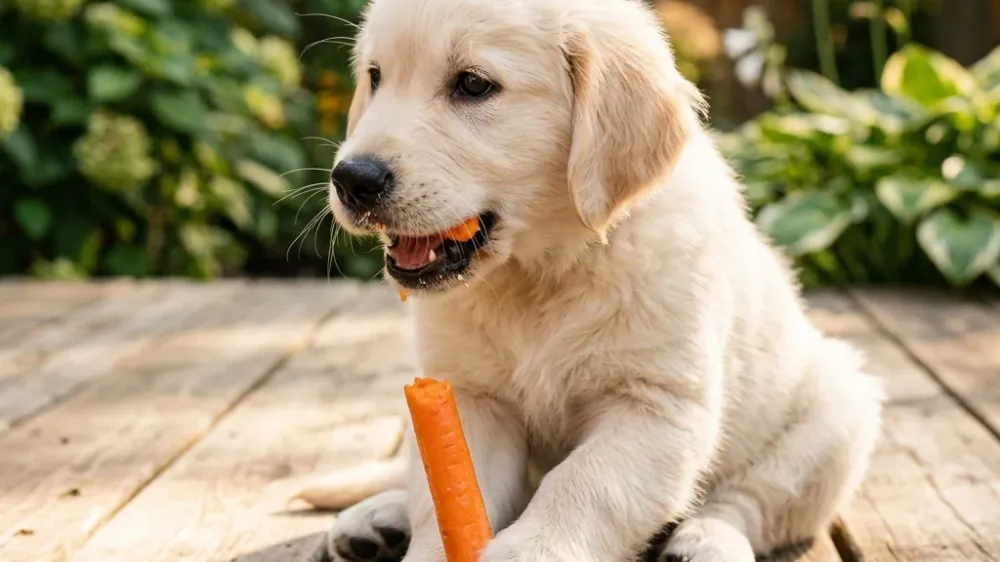
Yes, puppies can safely eat carrots. Carrots are one of the healthiest, lowest-calorie natural treats you can offer a growing dog. Packed with beta-carotene, vitamin A, potassium, and digestive fiber, carrots support immune health, vision, and proper stool consistency. Additionally, their firm texture helps scrape away plaque and offers safe relief during intense puppy teething phases.
While carrots are overwhelmingly safe, serving them incorrectly can pose choking hazards or mild stomach upset. Feeding whole carrots to a small breed or giving raw chunks to a very young puppy requires careful preparation.
💡 Pro Tip: Whole frozen carrots serve as an effective, natural cooling chew for teething puppies between 3 and 6 months old. Cold carrots numb sore gums and satisfy the urge to chew without adding unnecessary calories to your puppy’s diet.
📋 In This Guide
Nutritional Benefits of Carrots for Growing Puppies#
Carrots are rich in key nutrients that complement complete balanced puppy diets. While primary nutrients come from high quality kibble or balanced food, adding fresh carrots provides functional health advantages:
- Beta-Carotene and Vitamin A: Beta-carotene converts into Vitamin A inside the dog’s body, supporting cell function, immune system defense, and healthy eye development.
- Dietary Fiber: Soluble and insoluble fibers promote healthy gut motility, firm up loose stool, and support beneficial gut bacteria.
- Low Caloric Density: A single baby carrot contains roughly 3 to 4 calories, making carrots ideal training rewards compared to greasy, high calorie commercial treats.
- Dental Scrape Action: Crunching raw carrots gently scrapes surface plaque from developing teeth and massages gum tissue.
When substituting high-calorie snacks, carrots pair exceptionally well alongside other healthy produce like can puppies eat blueberries safely or small amounts of dog-safe nut butters covered in our guide on can puppies eat peanut butter.
Raw vs. Cooked vs. Frozen Carrots: Preparation Matrix#
How you prepare carrots depends directly on your puppy’s age, jaw size, and chewing habits. The comparison below breaks down the optimal ways to serve carrots safely.
| Preparation Method | Ideal Age Range | Primary Benefit | Risk Level / Preparation Notes |
|---|---|---|---|
| Pureed / Steamed | 8 to 12 Weeks | Easiest to digest, no choking risk | Very Low. Excellent topper for kibble. |
| Grated / Shredded | 8+ Weeks | Great diet supplement & food topper | Very Low. Blends easily into standard meals. |
| Frozen Sticks | 12+ Weeks (Teething) | Soothes inflamed, aching gums | Low to Medium. Supervise to prevent large gulps. |
| Raw Bite-Sized Chunks | 16+ Weeks | Excellent tooth-scraping texture | Medium. Must cut across the grain into tiny pieces. |
How to Prepare Carrots Safely for Puppies#
Preparing carrots correctly prevents digestive blockages and choking incidents. Follow these expert guidelines for safe preparation:
1. Wash and Peel Thoroughly#
Always scrub raw carrots under cold running water to remove dirt, debris, and potential pesticide residue. While carrot skins are non-toxic, peeling them removes tough outer layers that can be hard on young puppy stomachs.
2. Cut into Appropriate Sizes#
Never toss a whole baby carrot or full-sized raw carrot to a small or medium-sized puppy. Puppies frequently attempt to swallow treats whole without chewing. Cut carrots into bite-sized rounds or thin matches no larger than a piece of standard puppy kibble.
3. Cook for Sensitive Digestion#
If your puppy is under 12 weeks old or prone to an upset stomach, steaming or boiling carrots is best. Raw carrot cellular walls contain cellulose, which dogs cannot break down easily. Lightly cooking carrots softens the fibers, maximizing nutrient absorption without adding unnecessary oils, salts, or seasonings. You can easily sprinkle soft cooked carrots over wet vs dry food for puppies to boost texture and flavor.
4. Frozen Carrot Chews for Teething Relief#
To create an interactive teething treat, slice large carrots into thick full-length strips and place them in the freezer overnight. Offer one frozen strip to your puppy while supervised. As the puppy gnaws on the carrot, it gradually softens, safely cooling inflamed gum tissue.
KONG Puppy Rubber Toy
Made with customized soft rubber designed specifically for teething puppy gums, this toy can be stuffed with chopped carrots and wet food then frozen for long-lasting enrichment.
For enhanced mental stimulation, combine carrot pieces with a durable rubber chew toy. Stuff chopped carrot slices along with a spoonful of plain canned pumpkin into the chew toy, then freeze it for 2 to 3 hours. This keeps young puppies occupied and satisfied for extended periods.
Portion Control: How Many Carrots Can a Puppy Eat?#
Even healthy vegetables must adhere to strict nutritional ratios. Any treat, including carrots, must not exceed 10% of your puppy’s total daily calorie intake. The remaining 90% must come from a complete and balanced commercial puppy food or expert-designed feeding plan. If you feed a custom diet, consult our comprehensive best raw diet guide for puppies to support mineral ratios stay balanced.
- Small Breed Puppies (under 10 lbs): 1 to 2 baby carrots (cut into small bites) per day.
- Medium Breed Puppies (10 to 30 lbs): 2 to 3 baby carrots or half a medium carrot per day.
- Large Breed Puppies (30+ lbs): 3 to 4 baby carrots or one medium carrot daily.
⚠️ Safety Warning: Overfeeding carrots introduces high amounts of fiber quickly. This can lead to gas, bloating, loose stools, or sudden diarrhea. Introduce carrots slowly over 3 to 4 days while monitoring stool quality.
If you are establishing your puppy’s complete nutrition routine, balance treats around their main meals. Review our guide on how often should an 8 week old puppy eat to keep feeding schedules on track.
Carrot Feeding FAQ for Puppy Owners#
Can carrots give puppies diarrhea?#
Yes, if introduced too quickly or fed in excess. Carrots contain significant amounts of dietary fiber. A puppy’s gut environment is sensitive; sudden fiber spikes pull water into the intestines, causing loose stool or diarrhea. Always start with one tiny piece and evaluate their digestion over 24 hours.
Can puppies choke on baby carrots?#
Yes. Baby carrots are deceptively firm, smooth, and slippery. Enthusiastic puppies often attempt to swallow baby carrots whole, creating an immediate choking hazard or an intestinal blockage. Always cut baby carrots into quartered slices or thin strips before serving.
Are raw carrot tops and leaves safe for puppies?#
Carrot greens (the leafy tops) are non-toxic to dogs in tiny quantities, but they are bitter, fibrous, and difficult to digest. It is best to discard carrot greens and feed only the root portion of the vegetable.
Summary: Safe Carrot Feeding Action Plan#
Carrots serve as a budget-friendly, highly nutritious, and effective reward for growing puppies when prepared properly. To safely include carrots in your puppy’s daily schedule, follow this step-by-step action plan:
- Introduce Slowly: Start with a single cooked or finely grated piece to test digestive tolerance.
- Match Preparation to Age: Serve pureed or cooked carrots to puppies under 12 weeks; move to frozen carrot sticks once adult teeth begin emerging.
- Prevent Choking: Never serve whole raw baby carrots. Slice carrots into small kibble-sized pieces across the grain.
- Maintain Caloric Balance: Keep vegetable treats well under 10% of total daily caloric intake so you do not crowd out the nutrients in your puppy’s main food.
- Ask When Unsure: If your puppy has a sensitive stomach or a health condition, talk to your vet before adding new foods.