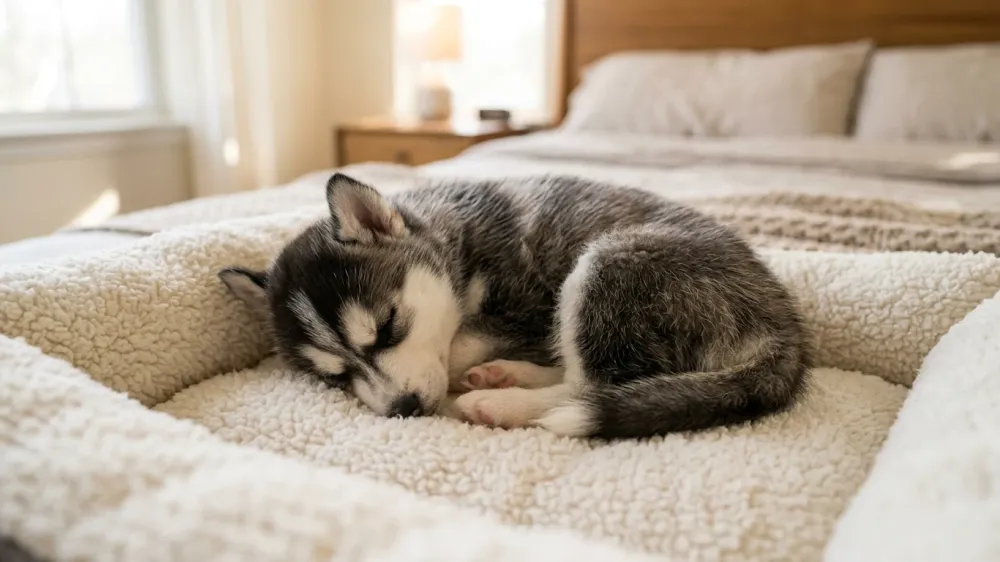
Watching your new puppy breathe rapidly while asleep can be alarming, but in most cases, it is completely normal. Puppies naturally breathe faster at rest than adult dogs. Most episodes of rapid breathing during sleep are caused by active dreaming, temperature regulation, or normal nervous system development.
Understanding what happens during a puppy’s sleep cycle helps pet parents distinguish between harmless dream twitches and genuine respiratory distress.
📋 In This Guide
Normal Puppy Respiration Rates During Sleep#
A healthy adult dog that is resting or asleep usually takes about 15 to 30 breaths per minute, and some take fewer. Puppies often breathe a little faster, and some vet clinics list 15 to 40 breaths per minute as normal for a resting puppy.
During active sleep, breathing can speed up for brief periods. As long as the pup is comfortable, easily wakes up, and breathes steadily once fully awake, this temporary increase is part of normal development.
To get a baseline, count your puppy’s breaths while they are sound asleep and not dreaming. One breath is one rise and fall of the chest. Count for 30 seconds and multiply by two. Do this a few times on different days and write the numbers down. Vet heart-care guides treat a sleeping rate that is often above about 30 breaths per minute as raised in dogs, and puppies can run a little higher. If your puppy’s sleeping rate is often above 30, show your notes to your vet. If it stays above about 40, keeps climbing, or breathing looks like hard work, call your vet. Your vet can tell you what number to watch for your puppy. If you notice accompanying full-body tremors, check our guide on why your puppy is shaking to pinpoint whether chills or muscle spasms are at play.
4 Common Reasons Puppies Breathe Fast While Sleeping#
Several physical and developmental factors explain why your young dog’s chest seems to move at lightning speed during naps.
1. Rapid Eye Movement (REM) Dream Cycles#
Just like humans, puppies move through distinct sleep stages. During the REM stage, their brains process everything they learned during the day. Because the brain is highly active, breathing becomes irregular and fast. You will often see accompanying signs like paw paddling, whimpering, lip twitching, or tail wagging.
2. Thermoregulation and Cooling Down#
Dogs do not sweat through their skin the way humans do. Instead, they rely on breathing and panting to release trapped body heat. If your puppy fell asleep right after a spirited training session or if their crate is slightly warm, they may breathe rapidly to lower their core temperature.
3. Rapid Growth and High Metabolism#
During early life stages, puppies grow at an incredible rate. Their hearts, lungs, and other organs are still maturing, and a fast-growing body tends to run a slightly higher breathing baseline at rest.
4. Stress and New Environment Overwhelm#
Settling into a new home can be overwhelming. Puppies that feel anxious or overtired may take longer for their nervous systems to switch into a calm state. A steady daily routine with regular naps helps an overwhelmed puppy settle. If your pup also seems unusually tired or hard to wake, check our guide to the signs of a sick puppy.
Normal REM Breathing vs. Abnormal Respiratory Distress#
Use this quick reference table to evaluate your puppy’s symptoms:
| Observation | Normal Sleep Breathing | Abnormal Respiratory Distress |
|---|---|---|
| Chest Movement | Quick, shallow, rhythmic rises | Heavy, strained, or exaggerated belly pumping |
| Gum Color | Healthy bubblegum pink | Pale, white, blue, or muddy purple |
| Accompanying Sounds | Soft whines, quiet snores, light puffs | Loud wheezing, harsh rattling, choking sounds |
| Wake Response | Wakes up alert, bright, and responsive | Difficult to wake, lethargic, weak, or disoriented |
| Duration | Lasts a few minutes during dream cycles | Continuous rapid breathing lasting hours while fully awake |
⚠️ Safety Warning: If your puppy shows exaggerated stomach effort to breathe, has blue or pale gums, or coughs persistently while resting, seek immediate medical attention from an emergency veterinary clinic.
How to Comfort a Restless Puppy at Night#
If your pup’s rapid breathing stems from mild stress, restlessness, or trouble settling down, setting up a calm environment is the most effective solution.
SmartPetLove Snuggle Puppy Heartbeat Plush Toy
A plush toy with a simulated heartbeat for puppies who pant and fuss at night.
A comfort toy like the SmartPetLove Snuggle Puppy Heartbeat Stuffed Toy, with its warm body and simulated heartbeat, helps some puppies settle more easily at night. For more options, see our guide to the best puppy calming aids for night.
Here are three practical adjustments you can make right away:
- Regulate Crate Temperature: Keep sleeping areas away from direct heat vents, drafty windows, or heavy blankets that trap excess warmth.
- Establish a Wind-Down Routine: Avoid intense play sessions right before bed. Replace high-energy fetch with gentle handling or light chewing.
- Address Discomfort: Young pups working through teething pains often sleep fitfully. Learn how to soothe sore gums in our puppy teething timeline and care guide.
Step-by-Step Action Plan: Assessing Your Puppy’s Sleep#
Follow these steps whenever you notice rapid breathing in your pup:
- Observe for Two Minutes Without Touching: Do not wake your pup immediately. Look for signs of dreaming such as ear twitches, soft muffled barks, or moving paws.
- Check Gum Color: Lift your puppy’s lip gently. Healthy gums should be bright pink. If you press lightly with your thumb, the pink color should return within two seconds.
- Assess Room Conditions: Place your hand in their bed. If the bedding feels hot or the pup feels overly warm, move the bed to a cooler, well-ventilated area.
- Wait for the Deep Sleep Shift: Within 5 to 10 minutes, the REM cycle should pass, and breathing should return to a steady, slow pace.
- Record Video for Your Vet: If you remain unsure, record a 30-second clip on your phone. Showing this video at your next checkup gives your vet useful context.
Frequently Asked Questions#
How many breaths per minute should a sleeping puppy take?#
Some vet clinics list 15 to 40 breaths per minute as normal for a resting puppy. For dogs in general, vet heart-care guides treat a sleeping rate that is often above about 30 as raised. Breathing can speed up for a short time during dreams or right after play. If your puppy’s rate stays high while sound asleep, talk to your vet.
Should I wake my puppy up if they breathe fast and twitch?#
No, it is best to let sleeping puppies rest. Waking a puppy during a deep REM dream cycle can startle them, leading to temporary confusion or defensive reactions. As long as they show no signs of physical distress, let the dream cycle run its course.
Can diet impact how easily a puppy settles down at night?#
It can. A consistent feeding routine and avoiding a big meal right before bed help many puppies settle. Ask your vet before adding extras like goat milk for puppies.
Summary: Managing Your Puppy’s Sleep Health#
Rapid breathing during sleep is usually a harmless reflection of a developing nervous system, active dream cycles, or standard heat regulation. Keep the sleeping environment cool, monitor for normal pink gum color, and observe how easily your puppy transitions into quiet rest. If rapid breathing persists while your puppy is awake, or if it is paired with lethargy and wheezing, talk to your vet right away.