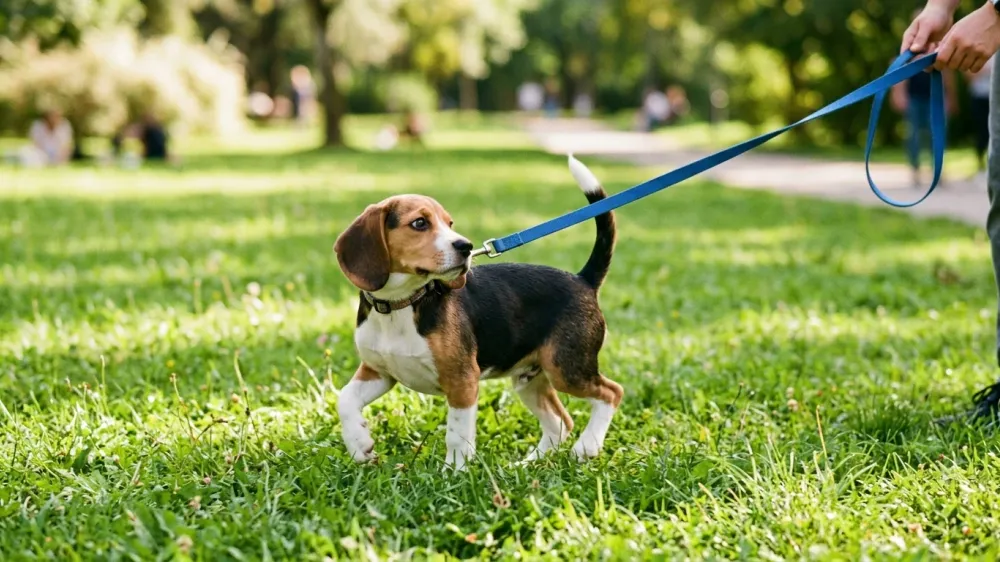
Selecting the right dog leash for puppy training directly dictates how quickly your young dog learns proper walking manners, directional control, and impulse management. A standard leash is not merely a restraint tool; it serves as the primary line of communication between your hand and your puppy’s harness or collar. Choosing an incorrect length, material, or clip mechanism can accidentally reinforce pulling, cause physical discomfort, or create safety hazards during early developmental stages.
For standard daily walks and structured obedience work, a classic six-foot fixed-length leash constructed from lightweight nylon, soft multi-filament rope, or waterproof Biothane remains the industry standard. We often recommend the
Mendota Pet Snap Leash 6-Foot
A high-quality, lightweight polypropylene rope leash designed for superior grip, hand comfort, and precise feedback during loose-leash obedience work.
📋 In This Guide
Selecting the Best Dog Leash for Puppy Training#
When evaluating leashes for young dogs, four primary factors determine success: length, weight, grip material, and hardware reliability. Puppies have delicate necks and lower physical stamina than adult dogs, meaning excess hardware weight can pull down on their frame and cause distraction.
Length Specifications#
- 6-Foot Leashes: The ideal standard for loose-leash training, heel work, and neighborhood navigation. It provides sufficient slack for exploration while keeping the handler within immediate control range.
- 4-Foot Leashes: Excellent for high-density urban environments, veterinary visits, or tight heel work where minimal slack is required.
- 10 to 15-Foot Long Lines: Ideal for recall practice, distance stay cues, and controlled open-field exploration without allowing off-leash freedom.
Material Comparison#
Leash materials directly influence your grip stability, weather resistance, and sanitation control. The chart below breaks down the top material choices for puppy handlers.
| Material | Weight | Waterproof | Ideal Training Purpose | Maintenance | Features |
|---|---|---|---|---|---|
| Nylon Webbing | Ultra-Light | No | General daily obedience and basic walking | Machine washable; prone to leash burn if pulled | Affordable, widely available, soft on hands |
| Biothane / TPU | Medium | 100% Yes | All-weather training, long-line recall practice | Wipe clean with damp cloth; odor-proof | Extremely durable, non-tangling, immune to rain and mud |
| Braided Rope | Light-Medium | Partial | Loose-leash practice and heelwork | Hand wash; quick drying | Ergonomic grip, shock-absorbing natural give |
| Top-Grain Leather | Medium-Heavy | No | Advanced obedience and formal working sessions | Requires leather conditioner; long lifespan | Molds to handler hands, highly professional feel |
⚠️ Safety Warning: Never tie or anchor a puppy to a stationary object using a leash and walk away. Unsupervised tethering can lead to panic, tangling, neck strain, or throat injury if the puppy lunges against the leash.
Types of Leashes to Avoid for Puppy Training#
Certain leash styles directly conflict with foundational behavioral mechanics and can compromise your training timeline.
Retractable Leashes#
Retractable units keep constant tension on the puppy’s collar or harness. This tension teaches the puppy that they must pull against resistance to move forward, which works against everything you want from loose-leash walking. In addition, thin cord lines pose severe hazards, including friction burns, snap-backs, and mechanical jams during high-distraction emergencies.
Heavy Chain Leashes#
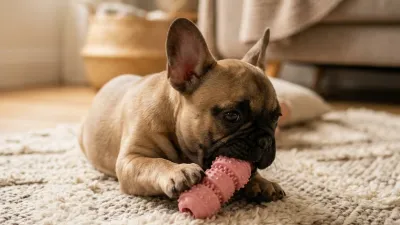
Metal chain leashes add unnecessary dead weight to a young puppy frame. While often marketed to deter chewers, they encourage handlers to yank rather than use gentle spatial pressure. If chewing is a problem during walks, direct the behavior using dedicated chew alternatives outside of walk times. Reading our guide on the best toys for a teething puppy will help resolve oral fixation issues using appropriate outlets.
Bungee or Elastic Leashes#
Bungee cords absorb tension, which eliminates the tactile feedback needed to communicate physical boundaries. When a puppy hits the end of a bungee lead, the rubberized retraction snaps them backward unexpectedly, creating confusion around spatial awareness.
Core Features for Rapid Training Progress#
To build clear communication, make sure your leash includes specific design elements that optimize physical handling and safety.
Swivel Snap Hooks#
Look for a lightweight brass or stainless-steel swivel clip. The 360-degree rotation prevents the leash from twisting into uncomfortable knots as your puppy changes sides or circles around your feet during practice.
Dual-Handle Configuration (Traffic Leads)#
A dual-handle leash features a standard loop at the six-foot terminus and a secondary close-control handle located 12 to 18 inches above the collar attachment. This second handle allows instant, low-stress management when navigating crowded sidewalks, passing other dogs, or crossing busy streets.
Hand Comfort and Grip Width#
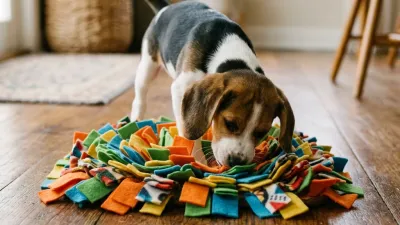
For medium to large breed puppies, a 3/4-inch width offers structural integrity without bulk. For toy or small breed puppies, select a 3/8-inch or 1/2-inch width to eliminate heavy neck hardware. Before starting physical walk sessions, burning mental energy inside through interactive puzzle play makes training far smoother. You can explore structured options in our review of the best interactive brain toys for puppies.
Step-by-Step Loose-Leash Training Protocol#
Follow this structured method to establish early loose-leash habits using a 6-foot nylon or rope lead.
- Indoor Acclimatization: Clip the 6-foot leash to your puppy’s harness inside the home. Let them drag it briefly while offering high-value rewards so they pair leash attachment with positive rewards.
- The Anchor Technique: Stand still in a low-distraction room. Hold the leash loop securely against your belly button with both hands. Do not move your feet.
- Reward the Slack: The moment your puppy turns back toward you and creates a curve (slack) in the leash, mark the behavior with a verbal marker (“Yes!”) and deliver a treat right next to your pant leg.
- The Stop-and-Go Rule: Begin walking forward. If the puppy lunges to the end of the leash, stop instantly. Become a tree. Wait silently until the puppy shifts back to relieve tension, then reward at your hip and resume walking.
- Direction Changes: If your puppy ignores your stop signal, quietly turn 180 degrees and walk briskly in the opposite direction. Your puppy will turn to catch up, learning that keeping an eye on your direction yields rewards.
Pairing structured outdoor walk protocols with reliable indoor crate routines helps your puppy stay well-rested between training windows. For setup guidance, read our breakdown of the best puppy crates for crate training.
💡 Pro Tip: Hold your leash loop over your thumb and gather the excess into neat folds inside your palm. Never wrap a leash around your fingers or wrist, as a sudden bolt from a startled puppy can cause finger injuries or rope burns.
💡 Related Guide: Ready to practice recall at a distance? See our picks for the best long training leads for puppy recall.
Frequently Asked Questions About Puppy Leash Training#
How long should a puppy leash be for standard loose-leash training?#
A 6-foot fixed leash is the ideal length for loose-leash walking and basic obedience. It grants enough room for the puppy to explore comfortably while allowing you to maintain full control without excess slack dragging on the ground.
Should I attach the leash to a collar or a harness during training?#
For initial leash training, attach the leash to a well-fitted Y-shaped front-clip or back-clip harness. Harnesses distribute pulling forces across the ribcage and chest, protecting the puppy’s delicate trachea and neck bones from damage if they lunge unexpectedly.
How do I stop my puppy from biting and tugging the leash?#
If your puppy grabs the leash in their mouth, avoid pulling back, which turns the leash into an exciting game of tug-of-war. Instead, hold the leash completely still against your body to stop movement. Redirect their mouth immediately to an approved toy or reward them for releasing tension with a quiet verbal marker and high-value treat.
Summary: Master Your Puppy Leash Training Plan#
Building reliable loose-leash walking takes patience, high reward frequency, and equipment that supports clear handling feedback. Follow this quick checklist to set your training sessions up for success:
- Equip the Right Lead: Use a 6-foot fixed nylon, rope, or Biothane leash paired with a comfortable harness.
- Avoid Retractable Cables: Eliminate continuous line tension so your puppy quickly learns that pulling stops forward movement.
- Protect Your Hands: Hold the leash loop with your thumb and handle excess line in neat folds rather than wrapping it around your hand or wrist.
- Maintain High Consistency: Stop every time the line becomes taut, mark every moment of natural slack, and reward your puppy directly at your hip.