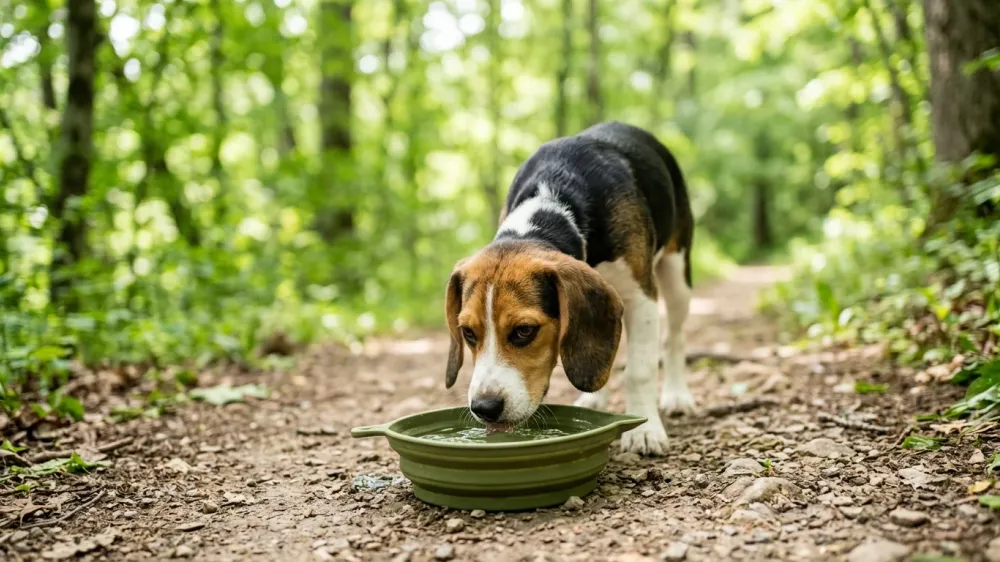
Puppies can dehydrate faster than adult dogs, especially on warm-weather walks and busy outings. Their small bodies hold less water, and their bursts of play burn through it quickly. Shared water bowls at dog parks can also spread germs and parasites, so a dedicated travel bottle is one of the most useful things you can carry for a young dog.
Selecting the right travel container means balancing capacity, spill resistance, one-handed operation, and puppy-safe materials. A bulky bottle that leaks in your gear bag or proves awkward while managing a leash and a squirming pup quickly becomes useless.
The MalsiPree Dog Water Bottle stands out because of its simple push-button mechanism. You can unlock the valve, tip the bottle to fill the integrated trough, and release the button to lock the water in place. Best of all, if your puppy only takes three laps of water, pressing the button while holding the bottle upright draws the remaining liquid straight back into the reservoir, saving your water supply on remote paths.
📋 In This Guide
Key Features to Look For in Puppy Travel Bottles#
Puppies do not drink like older dogs. Their small muzzles require shallow basins, and their impulsive movements mean equipment gets knocked around constantly. When assessing portable bottles, prioritize these design elements:
1. One-Handed Push-Button Flow#
When handling a young dog, one hand always controls the lead. If you are also working on foundational leash manners with the best harness vs collar for puppies, juggling a screw-cap lid and a separate bowl invites disaster. Choose designs with a thumb-operated valve that releases and seals water instantly.
2. Water Reclamation Feature#
Puppies frequently sniff water, take two sips, and get distracted by a leaf. Traditional bottles force you to dump the unconsumed portion onto the ground. A water return feature preserves clean water, which is handy on long road trips and remote trail walks.
3. Food-Safe, Non-Toxic Materials#
Young puppies chew on everything, including the edge of their drinking trough. Look for food-grade ABS plastics or food-grade 304 stainless steel. Verify that any plastic component is explicitly BPA-free, lead-free, and phthalate-free.
4. Reliable Silicone Gaskets#
A travel bottle belongs inside a backpack, sling bag, or vehicle cup holder. Cheap seals slip out of position, saturating your belongings. Double-sealed silicone gaskets with mechanical lock switches prevent accidental button presses inside pockets.
⚠️ Safety Warning: Never allow your puppy to drink from stagnant puddles, retention ponds, or communal dog park bowls. Standing water often harbors Giardia, Leptospira, and harmful blue-green algae, all of which can make young dogs seriously ill.
Travel Bottle Types Compared#
Different designs serve different outing styles. Review how the top bottle formats stack up before investing in your travel kit:
| Bottle Style | Best For | Pros | Cons |
|---|---|---|---|
| Integrated Trough (Push-Button) | Daily walks, training classes | One-hand operation, reclaims unused water, compact | Harder to deep-clean small valve components |
| Fold-Out Leaf / Silicone Flap | Short neighborhood strolls | Lightweight, fits standard water bottles, soft mouth feel | Cannot reclaim water, prone to tearing if chewed |
| Insulated Stainless Steel Dual-Cap | Summer hikes, hot-weather trips | Keeps water cold for hours, highly durable | Heavier to carry, requires two hands to unscrew bowl |
| Squeeze-and-Fill Bowl | Car travel, backyard sessions | Inexpensive, simple mechanical design | Requires constant hand pressure to keep water in bowl |
How to Train a Hesitant Puppy to Drink on the Go#
Many puppies reject unfamiliar plastic containers on their first outing. The sound of running water or the strange scent of new silicone can make timid dogs step back. Introduce the gear systematically before heading out on long excursions:
- Introduce the Dry Bottle at Home: Place the dry, clean bottle on the floor during playtime. Scatter high-value treats around the trough so the pup builds a positive emotional link with the object.
- Offer Broth or Filtered Water Indoors: Pour a small splash of low-sodium bone broth into the shallow trough. Allow the puppy to lap it up while you hold the container still at floor level.
- Test in Low-Distraction Outdoor Zones: Take the bottle into your yard or porch before testing it on busy walking paths. Offer small sips after a quick game of fetch.
- Pair with Seasonal Gear Prep: If you walk in colder weather, combine water breaks with gear routines such as the best winter clothing and booties guide for puppies to build predictable outdoor habits.
💡 Pro Tip: If your pup hesitates to drink outdoor water due to temperature, drop two ice cubes inside an insulated stainless bottle. Cold water often sparks immediate interest on warm training days.
Hydration Guidelines: How Much Water Does a Puppy Need?#
For a full breakdown by age and weight, see our guide on how much water a puppy should drink. As a baseline, healthy puppies need approximately 0.5 to 1 ounce of water per pound of body weight each day. Active play, warm weather, and teething can increase this baseline significantly. For instance, a 15-pound puppy needs roughly 8 to 15 ounces of daily water under normal conditions.
When packing for outings, pack double what you anticipate needing. Puppies spill water, lick the ground, and need extra hydration to cool their bodies down through panting since they cannot sweat through their skin.
Frequently Asked Questions#
Can my puppy share a travel water bottle with another dog?#
We advise against sharing bottles between unrelated dogs. Saliva transfer can transmit kennel cough, respiratory pathogens, and oral parasites. Give each pet a dedicated drinking spout to maintain strict hygiene, especially for young pups whose immune systems are still developing.
How often should I clean a portable puppy bottle?#
Disassemble and wash the bottle after every single outing. Moisture trapped inside valve channels quickly grows bacteria and slime. Wash the trough and reservoir with warm water and mild dish soap, allowing all parts to air-dry completely before reassembly.
Is stainless steel better than plastic for travel water bottles?#
Stainless steel resists bacterial growth, avoids holding odors, and keeps water cold much longer. However, food-grade plastic remains significantly lighter and generally easier to manage with one hand during quick training walks. For hot-weather hikes, choose stainless; for quick training sessions, high-quality ABS plastic works exceptionally well.
Hydration Checklist for Puppy Outings#
Before heading out the door, run through this quick checklist to protect your pup from dehydration and heat fatigue:
- Fill your travel bottle with clean, cold tap or filtered water right before leaving.
- Verify the silicone leak-lock switch is fully engaged before tossing it into your pack.
- Stop for voluntary water breaks every 20 to 30 minutes, or sooner if panting increases.
- Never force a puppy to drink, but offer the basin in quiet, shaded spots where distractions stay low.
- Inspect the drinking trough periodically for dirt or trail grit before pressing the water release valve.