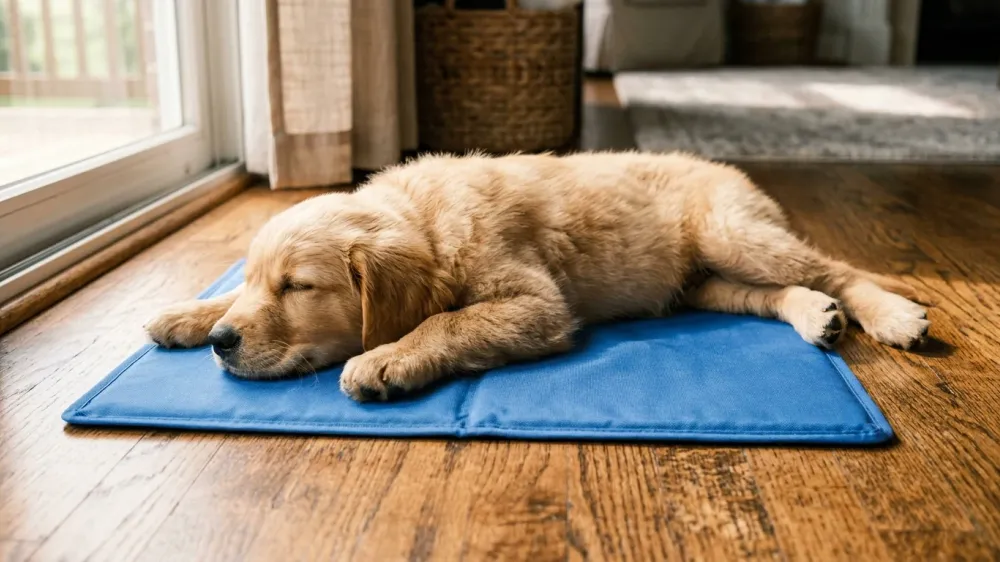
Puppies have a much harder time controlling their body temperature than adult dogs. Their still-developing bodies, dense puppy coats, and sudden bursts of play put them at rapid risk of overheating during warm weather. Finding the best cooling mats for puppies in summer requires balancing temperature regulation with puppy-proofing, especially because sharp baby teeth can puncture standard gear.
We look for cooling pads that offer immediate heat dissipation without posing ingestion hazards. Below, we break down the safest cooling mat styles, how to select the right model for your pup, and practical steps to integrate cooling gear into your summer puppy routine.
📋 In This Guide
How Puppy Cooling Mats Work#
Not all cooling pads function the same way. Understanding the mechanics helps you pick the right design based on your puppy’s age, breed, and chewing habits.
Pressure-Activated Gel Mats#
These mats contain a specialized, non-toxic gel that absorbs body heat and dissipates it into the surrounding air. The mat activates under your puppy’s weight and drops the surface temperature by several degrees below room temperature. They require no electricity, water, or pre-chilling, making them simple to transport from room to room.
Elevated Mesh Cots#
While not technically a “mat,” elevated dog cots lift your puppy several inches off the warm floor. The breathable mesh promotes complete 360-degree airflow around the body. These are often the safest choice for power chewers that destroy fabric or gel items.
Ice-Pack and Water-Filled Mats#
Water-filled or freezer-pack inserts provide intense cooling. However, they carry higher risks for young puppies. Sharp puppy teeth can easily puncture vinyl water bladders or break into frozen inserts, causing indoor flooding or safety concerns.
Comparison: Puppy Cooling Mat Types#
| Cooling Type | Cooling Duration | Chew Resistance | Best For |
|---|---|---|---|
| Pressure-Activated Gel | 2-4 hours per session | Moderate (needs monitoring) | Crates, living rooms, travel |
| Elevated Mesh Cot | Continuous airflow | High | Heavy chewers, outdoor patios |
| Phase-Change Fabric | Mild, continuous | High | Mild warm days, light chewers |
| Frozen Gel / Water Core | 3-5 hours | Low | Supervised indoor use only |
⚠️ Safety Warning: Never leave an unsupervised, teething puppy alone with a gel or water mat. While top brands use non-toxic gels, ingesting the outer plastic shell or large amounts of filler can cause stomach upset or intestinal blockages.
What to Look for in a Puppy-Safe Cooling Pad#
When buying cooling gear for young dogs, durability and non-toxic materials take priority over extreme chill power.
- Non-Toxic Gel Formulations: Look for mats clearly labeled with non-toxic, pet-safe gel fillings. Accidents happen, and a punctured mat should not cause an emergency.
- Heavy-Duty Exterior Fabric: High-denier nylon, thick PVC, or ripstop covers stand up much better to puppy nails and casual biting than soft polyester covers.
- Portability and Ease of Cleaning: Summer brings muddy paws and outdoor play. Mats with smooth, wipe-clean surfaces make maintenance quick after park outings.
- Proper Sizing: Choose a mat that matches your puppy’s anticipated growth over the summer, allowing them room to sprawl out fully on their side.
Our Top Recommended Puppy Cooling Mat#
For most puppies, a pressure-activated pad offers the best balance of cooling performance and ease of use. It cools on contact and automatically recharges once the puppy stands up and leaves the pad for 15 to 20 minutes.
The Green Pet Shop Dog Cooling Mat
A patented pressure-activated gel cooling pad that cools without water, electricity, or refrigeration.
This specific pad does not require messy water filling or refrigeration. It provides a comfortable surface that fits easily inside standard wire crates or on top of puppy playpen flooring.
Preventing Chewing on Summer Cooling Gear#
Teething puppies naturally explore their environment with their mouths. If your puppy mistakes their new cooling mat for a giant chew toy, redirect the behavior immediately.
Pair the cooling mat with appropriate teething solutions. Offering frozen treats on best lick mats for puppy anxiety and teething while your puppy lies on their cooling pad creates a positive association with rest. You can also redirect biting urges with best interactive brain toys for puppies or hide low-calorie treats inside best snuffle mats for puppy mental stimulation nearby.
💡 Pro Tip: Place a light cotton sheet over the cooling mat during the first few days. This keeps the mat cool to the touch while disguising shiny vinyl corners that tempt puppies to chew.
How to Introduce a Cooling Mat to Your Puppy#
Do not force your puppy onto the mat. Forcing them can create suspicion and avoidance. Follow this simple training process:
- Place the mat in a preferred rest area: Lay the mat in a shaded corner of your living room or inside their open exercise pen where they already enjoy resting.
- Reward investigation: Drop small treats onto the surface. Allow your puppy to walk across the mat at their own pace to feel the cool texture.
- Capture settling behavior: When your puppy lies down on the pad, calmly praise them and deliver a treat between their front paws.
- Supervise and redirect: If the puppy grabs the edge of the mat with their teeth, calmly say a redirection cue, offer a textured chew toy, and praise them for making the switch.
If you take your puppy outdoors, pair the cooling pad with a lightweight harness from our guide on the best harness vs collar for puppies to keep them secure in shaded rest zones.
Frequently Asked Questions#
Are gel cooling mats safe if a puppy punctures them?#
Reputable cooling mats use non-toxic, pet-safe cooling gel composed mostly of water and food-grade polymers. While the gel itself is generally safe, you should remove the damaged mat immediately. Ingesting parts of the puncture-resistant plastic shell can still lead to digestive issues.
How do you recharge a pressure-activated cooling pad?#
Pressure-activated mats recharge automatically when not in use. Once your puppy gets up, the internal gel transfers absorbed heat back into the ambient room air. After roughly 15 to 30 minutes of non-use, the pad returns to its full cooling capacity.
Can I put a cooling mat inside my puppy’s crate?#
Yes, but only if the mat covers half or two-thirds of the crate floor. Your puppy must always have the freedom to move off the cooling surface onto dry, normal bedding if they feel too cold.
Summary: Summer Cooling Action Plan#
Protecting your young dog during summer heat requires a multi-layered approach:
- Select the right style: Choose pressure-activated non-toxic gel mats for general indoor use, or elevated mesh cots for determined chewers.
- Supervise early sessions: Teach your puppy that the mat is a calm settling area, not a tug toy.
- Provide constant hydration and shade: Use cooling pads alongside fresh water bowls and quiet rest areas during peak afternoon heat.
- Monitor body language: Look for signs of heat fatigue like heavy panting, glassy eyes, or reluctance to move, and call your vet right away if you suspect heat stress.