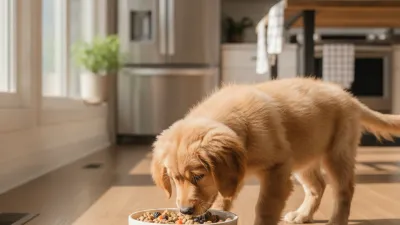
Plain white rice is one of the most reliable home remedies to soothe a puppy dealing with mild diarrhea, digestive upset, or an unsteady gut. Because young dogs have delicate digestive systems, sudden dietary shifts, stress, or mild dietary indiscretions frequently lead to soft stools. A short-term bland diet built around plain white rice is easy on the gut and can help firm up loose stools.
Here is how to prepare it, how much to serve, and when stomach trouble needs a vet instead.
📋 In This Guide
Why White Rice Soothes a Puppy’s Digestion#
White rice offers a high-glycemic, low-fiber carbohydrate source that digests quickly without forcing the digestive tract to work hard. The bland starch adds bulk to loose stools and can help firm them up.
Unlike adult dogs, young puppies dehydrate quickly when experiencing loose stools. A gentle bland meal gives the gut a break while keeping some food going in. If your young dog often has stomach trouble after routine meals, talk to your vet about whether a diet change makes sense; our guide on puppy diarrhea and when to go to the vet covers the warning signs.
White Rice vs. Brown Rice for Digestive Relief#
While brown rice is often touted as a healthier grain for daily adult nutrition, it is a poor choice for a puppy with an active stomach bug. Brown rice retains its outer bran coating, which is rich in insoluble fiber and tough oils. This fiber speeds up digestion and causes extra gut contractions, which aggravates diarrhea rather than stopping it.
White rice has had its outer husk, bran, and germ removed. This leaves only easily digestible starches that pass smoothly through the intestinal lining.
| Feature | White Rice | Brown Rice |
|---|---|---|
| Fiber Content | Very Low (Ideal for loose stool) | High (Increases bowel activity) |
| Digestibility | Fast and extremely gentle | Slower, requires higher metabolic effort |
| Gut Impact | Binds liquid, bulks up stool | Can irritate inflamed intestinal walls |
| Best Used For | Upset stomach, diarrhea, recovery | Daily balanced diet for healthy adult dogs |
How to Prepare White Rice for a Puppy#
Preparing rice for a sick puppy requires total simplicity. Never use butter, cooking oils, garlic, onions, salt, or seasonings of any kind. Oils slow stomach emptying and worsen intestinal inflammation, while garlic and onions are toxic to dogs.
- Choose Standard Plain White Rice: Use regular long-grain white rice, jasmine rice, or basmati rice. Avoid seasoned instant rice packets or pre-packaged mixes containing sodium.
- Overcook the Rice Slightly: Add extra water during cooking (such as a 1 to 3 ratio of rice to water) and let it cook until soft and mushy. Overcooked rice releases extra starches, making it even easier for an inflamed gut to process.
- Pair with a Lean Protein: Plain rice lacks key proteins and amino acids. Combine cooked white rice with boiled, skinless, boneless chicken breast at a 2-to-1 ratio (two parts white rice to one part boiled chicken). If chicken causes dietary sensitivity, plain eggs make a clean alternative source of protein. Read our guide on how puppies can eat eggs cooked safely.
- Cool Completely: Serve the mixture lukewarm or completely cool. Hot food can burn a puppy’s mouth or provoke a nausea response.
Portion Sizes and Feeding Guidelines#
When a puppy suffers from an upset stomach, feeding full-sized meals can overload their recovery capacity. Divide their daily serving into three or four small feedings spaced evenly across the day.
- Small Breeds (Under 10 lbs): 2 to 3 tablespoons of rice mixture per feeding, 3 times daily.
- Medium Breeds (10 to 30 lbs): 1/4 cup to 1/2 cup of rice mixture per feeding, 3 to 4 times daily.
- Large Breeds (30 to 60+ lbs): 3/4 cup to 1 cup of rice mixture per feeding, 3 to 4 times daily. Large breed puppies like Golden Retrievers require careful caloric monitoring; review our guide on the best dog food for golden retriever puppies for balanced daily nutrition after recovery.
💡 Pro Tip: Transitioning back to normal kibble must be gradual. Once your puppy produces normal, firm stools for 24 hours, slowly reintroduce their normal food over a 3 to 4 day period. Start by mixing 75% bland diet with 25% regular kibble, slowly increasing the kibble ratio each day.
Safe Whole-Food Additions for Gut Recovery#
Once your puppy shows initial signs of stabilization, small whole-food additions can provide mild fiber support and vitamins without disturbing digestion:
- Pureed Pumpkin: A single teaspoon of 100% plain canned pumpkin puree (not pumpkin pie mix) helps regulate intestinal moisture.
- Boiled Carrots: Finely mashed boiled carrots add vitamins and natural minerals to a bland recovery diet. Read our complete guide on how puppies can eat carrots for serving tips.
- Low-Sodium Chicken Broth: Adding a splash of plain, onion-free broth can encourage a dehydrated puppy to drink.
Avoid feeding rich treats or fruits during acute recovery, though you can reintroduce high-value rewards like puppies eating blueberries safely or puppies eating peanut butter once their bowel movements return to normal.
⚠️ Safety Warning: A bland diet is intended only for minor digestive issues. If your puppy exhibits any of the following critical warning signs, talk to your vet right away:
- Diarrhea that lasts longer than 24 to 48 hours.
- Blood in the stool (bright red streaks or dark, tarry stools).
- Repeated vomiting or inability to keep water down.
- Extreme lethargy, pale gums, or collapse.
- Suspicion that the puppy swallowed a toy, fabric, or foreign object.
Frequently Asked Questions#
Can puppies eat jasmine or basmati rice for diarrhea?#
Yes. Both jasmine and basmati rice are refined white starches that digest easily and perform just as effectively as standard long-grain white rice. Make sure they are cooked completely plain without butter, salt, or spices.
How long can a puppy stay on a chicken and rice diet?#
A chicken and rice diet should only be used for 2 to 4 days. Plain white rice and chicken lack the complete balance of calcium, phosphorus, key fats, and vitamins necessary for a growing puppy. Prolonged feeding of a bland diet can lead to nutritional deficits in young dogs.
Can I use instant white rice for an upset stomach?#
Instant white rice is acceptable as long as it contains no added seasonings, sodium, or flavorings. Plain overcooked traditional white rice is preferred because it yields higher starch availability, but plain instant white rice works in an emergency.
Purina Pro Plan FortiFlora Dog Probiotic
A probiotic powder you sprinkle on food to help support healthy gut bacteria while a puppy's stomach settles.
Summary: Action Plan for Puppy Stomach Relief#
- Provide fresh water continuously to prevent dehydration caused by loose stools.
- Boil plain white rice in plain water (no salt, oils, or seasonings) until very soft.
- Combine 2 parts cooked white rice with 1 part plain boiled chicken or scrambled egg.
- Feed small, frequent portions (3 to 4 times per day) based on your puppy’s weight.
- Monitor stool consistency closely over 24 to 48 hours and call your vet if severe symptoms develop.
- Wean back to regular kibble over 3 to 4 days once bowel movements normalize.