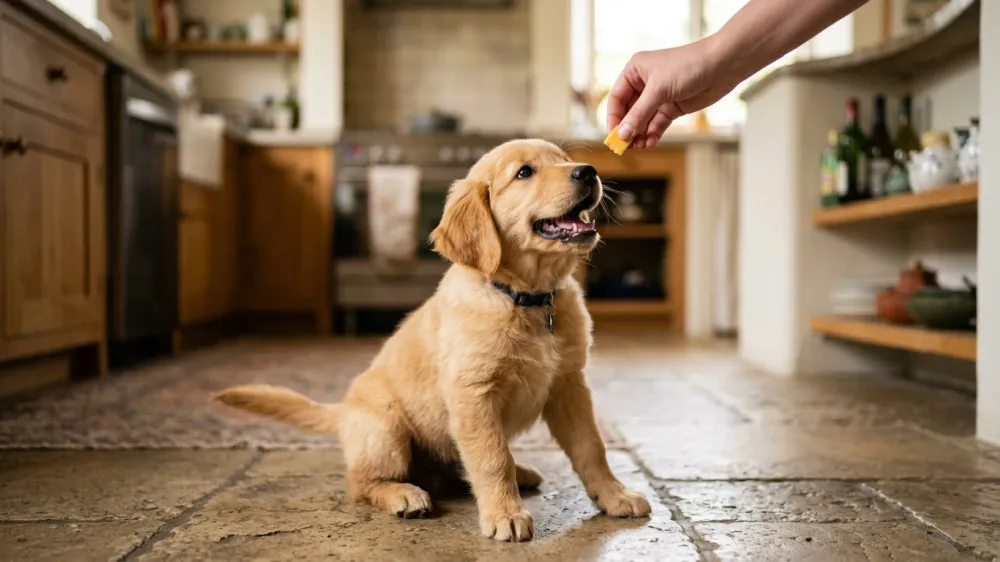
Puppies can safely eat cheese in moderation, and it works well as a high-value training reward. Because of its pungent aroma and rich flavor profile, cheese cuts through environmental distractions faster than standard dry biscuits.
However, dairy products require careful handling. A puppy’s digestive system is delicate, and overfeeding rich foods can trigger loose stools or upset stomachs. Understanding which varieties to choose, how to size portions, and when to deploy cheese will make your training sessions both safe and productive.
📋 In This Guide
Why Cheese Works as a High-Value Training Reward#
In animal training, a “high-value” treat is something your dog values above all standard food options. While standard kibble works well inside a quiet living room, it often loses its appeal when your puppy steps outside into a busy park full of exciting smells.
Cheese provides an intense scent and soft texture that commands instant focus. Save high-value rewards for challenging milestones such as emergency recall, leash manners around strange dogs, and early crate desensitization. When a puppy learns that looking at you earns a savory crumb of cheddar, focus tends to improve quickly.
Cheese is also pliable. You can quickly pinch off tiny pieces that your puppy can swallow right away, preventing awkward pauses in your training rhythm.
Understanding Lactose and Puppy Digestion#
While nursing, young puppies produce abundant quantities of lactase, the enzyme responsible for breaking down lactose in mother’s milk. As puppies wean onto solid food, their bodies naturally downregulate lactase production.
Most young dogs can handle trace amounts of dairy without issue, but excessive lactose will ferment in the colon, drawing water into the intestines. This leads to gas, abdominal cramping, and watery diarrhea. If your puppy accidentally consumes too much dairy and develops an unsettled gut, simple bland diets like cooked rice for an upset stomach can help settle their digestion.
⚠️ Safety Warning: Introduce cheese in tiny, isolated test portions. Give your puppy a single pea-sized crumb on day one and monitor their stool consistency over the next 24 hours before using cheese in an active training session.
The Best Cheeses for Puppies (and What to Avoid)#
Not all cheeses are created equal. When selecting training rewards, look for varieties that are lower in fat and sodium while remaining easy to handle.
Recommended Cheeses#
- Low-Moisture Mozzarella (String Cheese): Lower in fat than many cheeses, low in lactose, and remarkably easy to slice into micro-rewards. It holds its shape without melting quickly in your pocket.
- Mild Cheddar: Extremely aromatic and appealing to dogs. Keep pieces small due to moderate fat content.
- Low-Fat Cottage Cheese: Very gentle on digestion and low in lactose. While messy for pocket training, it works well as a lickable reward during grooming sessions.
- Swiss Cheese: Naturally aged, which reduces its lactose content significantly compared to younger, fresh cheeses.
Cheeses to Avoid Completely#
- Blue Cheeses (Roquefort, Gorgonzola, Stilton): The fungus used to produce blue cheese produces roquefortine C, a substance dogs are exceptionally sensitive to that can cause tremors and seizures.
- Flavored Cheeses: Never feed cheese varieties containing garlic, chives, onions, or hot peppers, as allium plants are toxic to dogs.
- Brie, Camembert, and Goat Cheese: These soft cheeses carry high fat levels that can overwhelm a puppy’s pancreas.
| Cheese Type | Fat Level | Lactose Level | Training Suitability |
|---|---|---|---|
| String Cheese (Mozzarella) | Low - Moderate | Very Low | Excellent (clean, sliceable) |
| Swiss | Moderate | Trace | Excellent (digestible) |
| Mild Cheddar | Moderate - High | Very Low | Good (use micro-portions) |
| Cottage Cheese | Low | Low | Good (grooming/crate paste) |
| Blue Cheese Varieties | High | Low | Dangerous (toxic compounds) |
| Garlic & Herb Jack | High | Moderate | Dangerous (toxic alliums) |
Proper Portion Sizing and the 10 Percent Rule#
A common mistake puppy owners make is cutting treats too large. A piece of cheese intended for a puppy should be roughly the size of an uncooked grain of rice or a small split pea. A puppy does not calculate reward value by treat size; they measure value by smell, flavor intensity, and delivery speed.
Treats should never account for more than 10 percent of your puppy’s total daily caloric intake. The remaining 90 percent must come from a complete, balanced puppy growth diet to protect developing bones and joints.
If you have an extended training session planned, balance cheese with low-calorie options. Alternating cheese with crunchy carrots or fresh blueberries for puppies keeps motivation high without overloading your puppy on sodium.
Integrating Cheese into Training Drills#
Carrying cheese during active drills requires practical gear. Room-temperature cheese can turn into a sticky paste if thrown loosely into a coat pocket. A treat pouch with an easy-to-clean lining prevents mess and speeds up reward delivery.
Beyond basic pocket treats, cheese works well in enrichment toys. Smearing a dime-sized amount of cottage cheese inside a rubber chew toy keeps a teething puppy occupied in their crate, building positive associations with quiet time.
If your young dog shows reluctance at mealtimes due to teething discomfort, a tiny dusting of finely grated parmesan can encourage a picky puppy to eat their standard kibble. If a puppy skips more than a meal or two, see our guide to the signs of a sick puppy.
💡 Pro Tip: To prepare string cheese for training, slice the stick lengthwise into four long quarters, then chop across to create hundreds of tiny, uniform micro-squares. Freeze them on a baking sheet for 20 minutes before loading your pouch so they do not stick together.
Frequently Asked Questions#
Can 8-week-old puppies eat cheese?#
It is best to wait until a puppy is at least 10 to 12 weeks old before introducing rich dairy treats like cheese. At eight weeks, puppies have just undergone weaning and the stress of transitioning to a new home. Their gastrointestinal tracts are particularly sensitive during this adjustment phase, so stick strictly to balanced puppy food and gentle rewards first.
What should I do if my puppy accidentally eats a whole block of cheese?#
If your puppy steals a large portion of cheese, monitor them closely for signs of pancreatitis or intestinal obstruction from plastic wrappers. Symptoms include repetitive vomiting, lethargy, severe bloating, and watery diarrhea. Talk to your vet for guidance, and offer small amounts of water to prevent dehydration if mild diarrhea develops.
Can I use cheese to hide medication for my puppy?#
Yes, cheese is one of the most reliable vehicles for disguising dewormers or prescribed tablets. Molding a pea-sized piece of cheddar or cream cheese around the tablet creates a slippery reward that most puppies swallow whole without chewing.
Summary: Safe Cheese Protocol for Training#
- Select the Right Variety: Stick to low-moisture part-skim mozzarella string cheese or Swiss to keep fat and lactose levels low.
- Cut to Grain-Sized Bites: Dice the cheese into tiny bits no larger than a grain of rice to preserve caloric balance.
- Reserve for High Distractions: Keep cheese exclusively for challenging drills like recall, busy outdoor socialization, and crate manners.
- Rotate Protein Sources: Combine cheese rewards with other safe options like cooked eggs for protein variety for variety.