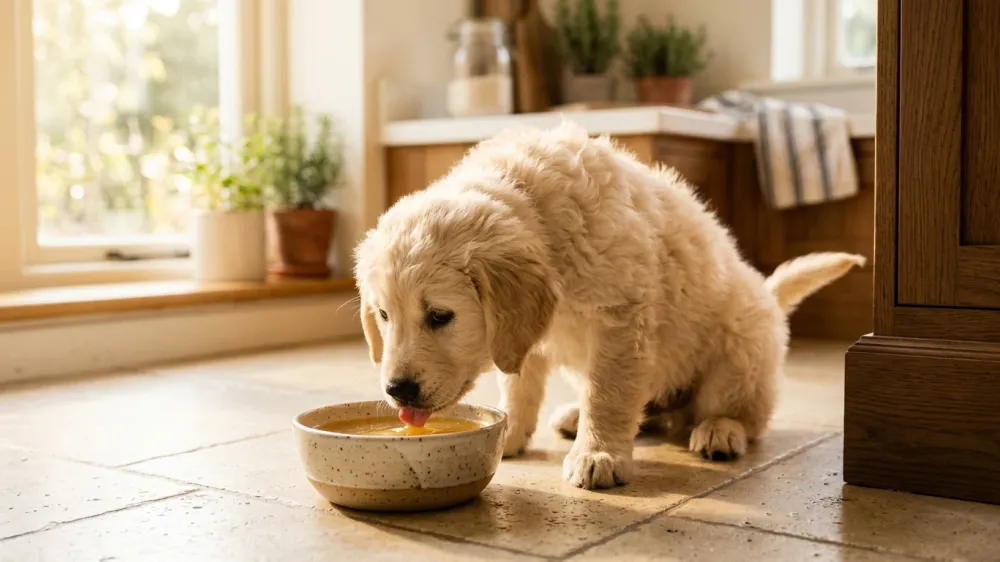
Bone broth is one of the most versatile food toppers you can give a growing dog. It is tasty, hydrating, and contains gelatin, collagen, and amino acids. It works best as an extra on top of a complete puppy food, not as a fix for any health problem, and it is especially handy for picky eaters.
Below is what bone broth can and can’t do, how to pick a safe broth, and how much to serve.
📋 In This Guide
4 Core Benefits of Bone Broth for Growing Puppies#
Puppies experience massive physiological changes during their first twelve months. Their bones, digestive tract, and immune defenses develop quickly. Here is where broth fits in.
1. Joint and Cartilage Development#
As puppies run, jump, and explore, their joints undergo intense physical stress. Bone broth contains gelatin and collagen, and some broths contain small amounts of glucosamine and chondroitin. A complete puppy food already supplies what growing joints need, so think of broth as a bonus rather than joint therapy.
For large and giant breed puppies, the bigger joint factor is a large-breed puppy food with controlled calories and calcium. If you have a big pup, start with a guide like the best dog food for golden retriever puppies, then use broth as a topper.
2. Soothing Sensitive Digestion and Gut Health#
A young dog’s gut lining is delicate and prone to irritation from dietary transitions, stress, or minor intestinal upsets. Plain, low-fat broth is mild and easy for most puppies to digest.
If your pup has loose stools, a little plain broth can make a bland meal more appealing; our guide on puppy diarrhea and when to go to the vet covers when home care is not enough. When introducing a new protein, watch for signs of a food allergy, like itchy skin or repeated ear problems.
3. Palatability and Hydration for Picky Eaters#
Many puppies go through phases of meal refusal, particularly during teething or after moving into a new home. Bone broth acts as a natural aroma and flavor enhancer that encourages hesitant eaters to finish their meals. Pouring warm broth over dry kibble softens the crunchy texture, making it far easier for tender gums to chew.
Beyond taste, hydration is important for kidney function and body temperature regulation. If you are weighing the benefits of wet vs dry food for puppies, adding bone broth to high-quality dry kibble offers the best of both worlds: convenient crunch and dense hydration.
4. Enrichment and Variety#
Broth is an easy way to add flavor and variety without changing your puppy’s main food. Frozen broth in a toy or slow feeder turns a meal into a longer, calmer activity.
💡 Pro Tip: During painful teething periods around 4 to 6 months of age, freeze bone broth into silicone ice molds. A frozen broth cube can soothe sore gums and gives your puppy a calm chewing activity.
Nutritional Comparison: Broth Types for Puppies#
Not all broths offer identical nutrient profiles. Selecting the right protein base helps tailor the benefits to your puppy’s specific energy needs and protein sensitivities.
| Broth Type | Primary Benefit | Best For | Flavor Intensity |
|---|---|---|---|
| Beef Bone Broth | High collagen and iron content | Large breeds and active working puppies | Rich / Strong |
| Chicken Bone Broth | Lean protein, highly gentle on stomachs | Teething puppies and mild digestion resets | Moderate / Mild |
| Turkey Bone Broth | Low fat, mild flavor | Pups with sensitive bellies or allergy concerns | Mild |
| Pork Bone Broth | High glycine and beneficial fatty acids | High-energy puppies needing calorie support | Very Rich |
What to Look for in a Commercial Puppy Bone Broth#
While homemade broth is excellent, busy schedules often make commercial pet broths more practical. However, grocery store broths made for people are often unsafe for puppies because they frequently contain toxic alliums (onions and garlic) and excessive sodium levels.
When shopping for a dog-formulated bone broth, look for:
- Zero added sodium or salt.
- Absence of garlic, onion, leeks, or chives.
- Human-grade, hormone-free animal bones.
- Minimal fillers, gums, or artificial preservatives.
Native Pet Bone Broth for Dogs
A clean, dehydrated human-grade bone broth powder free from added sodium, onions, and garlic.
Native Pet Organic Bone Broth Powder for Dogs provides a shelf-stable, dog-safe solution. Simply mix a scoop with warm water to create a fresh gravy topper, or sprinkle the dry powder directly onto food for quick meal enhancement.
Safe Feeding Guidelines and Daily Portions#
Moderation is key when introducing any supplement to a puppy’s diet. Too much broth too quickly can cause loose stools. If your puppy has a sensitive stomach, a known food allergy, or is on a special diet, talk to your vet before adding broth.
⚠️ Safety Warning: Never feed cooked bones from your homemade broth to a puppy. Cooked bones become brittle and can splinter, posing severe choking and internal puncture risks. Strain all solids completely before serving.
Daily Serving Sizes by Puppy Weight#
- Toy and Small Puppies (Under 10 lbs): 1 to 2 tablespoons (15 to 30 ml) per day.
- Medium Puppies (10 to 30 lbs): 2 to 4 tablespoons (30 to 60 ml) per day.
- Large Puppies (31 to 60 lbs): 1/4 to 1/2 cup (60 to 120 ml) per day.
- Giant Puppies (Over 60 lbs): 1/2 to 3/4 cup (120 to 180 ml) per day.
Creative Ways to Serve Bone Broth#
- Kibble Hydration: Pour warm (not hot) broth over dry food and let it sit for 5 minutes before serving.
- Slow Feeder Slurry: Mix broth with canned food, spread it inside best slow feeder bowls for puppies, and freeze it for extended mental stimulation.
- Training Treat Ice Pops: Blend bone broth with pumpkin puree or unsweetened plain yogurt, pour into molds, and freeze for warm-weather rewards.
Frequently Asked Questions#
At what age can a puppy start having bone broth?#
Puppies can begin consuming small amounts of dog-safe bone broth once they start transitioning to solid food, typically around 6 to 8 weeks of age. Start with a single teaspoon mixed into their weaning mash or kibble to monitor how their digestive system handles the rich nutrients.
Can puppies drink human grocery store bone broth?#
No, standard grocery store broths designed for human consumption should not be given to puppies. Most commercial human broths contain high sodium levels, onion powder, garlic extract, and other seasonings that are toxic to dogs. Always choose a product formulated specifically for pets or make your own plain version at home.
Can puppies have bone broth every day?#
Yes, puppies can safely enjoy bone broth every day as long as it does not exceed 10 percent of their daily caloric intake. Plain broth is low in calories, so it works well as a daily topper on a complete and balanced puppy food.
Summary: Step-by-Step Action Plan for Adding Bone Broth#
- Select a Clean Source: Pick a dog-safe liquid or powdered broth free from onions, garlic, and added salt.
- Start Small: Introduce 1 teaspoon per day for small pups or 1 tablespoon for larger breeds over a 3-day evaluation window.
- Monitor Stool Quality: Verify that your puppy’s digestion remains firm and consistent before increasing to the full daily portion.
- Use for Enrichment: Leverage liquid broth for meal hydration and frozen broth in slow feeders to keep your puppy mentally satisfied and physically nourished.